

Table of Contents
- Why Sustainably Sourced Caribbean Rum Matters to Buyers
- Estate-Grown Sugarcane Rum: What It Means for Flavour
- The Environmental Impact of Rum Production Across Its Lifecycle
- Rum Made Without Added Sugar: What the Label Does Not Tell You
- How to Spot Genuine Sustainable Caribbean Rum Brands
- Community, Labour and Land: The Caribbean Side of the Story
- Common Mistakes When Buying Sustainable Caribbean Rum
- Conclusion: Drinking Better, Not Just More Expensively
- Frequently Asked Questions
Last Updated: October 7, 2026
Why Sustainably Sourced Caribbean Rum Matters to Buyers
The benefits of sustainably sourced Caribbean rum start with what ends up in your glass. Rum distilled from estate-grown cane, without added sugar, and bottled with a clear supply chain gives you a cleaner flavour and a product you can actually trace back to a farm.
That traceability is the whole point. At SolarRum, we source from distilleries that grow their own sugarcane rather than importing it, then bottle the results with Scottish cask masters. The difference shows up in the bottle, not just the marketing copy.
Most supermarket rums are built on a simple equation: buy the cheapest molasses available, distill it in bulk, add sugar and colouring to smooth out the rough edges, and ship it. It works commercially. It also means you have no idea where the cane came from, who grew it, or what was added after distillation.
Sustainable sourcing flips that equation. The cane is grown locally, the distillery has a stake in the land it farms, and the finished spirit needs less intervention because the raw material is better to begin with.
Estate-Grown Sugarcane Rum: What It Means for Flavour
Estate-grown sugarcane rum is rum made from cane harvested on land the distillery itself controls or partners with directly, rather than cane bought on the open commodity market. That single decision affects flavour more than almost anything else in production.
Freshly cut cane starts losing sugar content within hours of harvest. Distilleries working with imported molasses are working with a product that has already been processed, shipped, and stored. Distilleries pressing their own cane, or working with growers nearby, capture far more of the aromatic compounds that give rum its character.
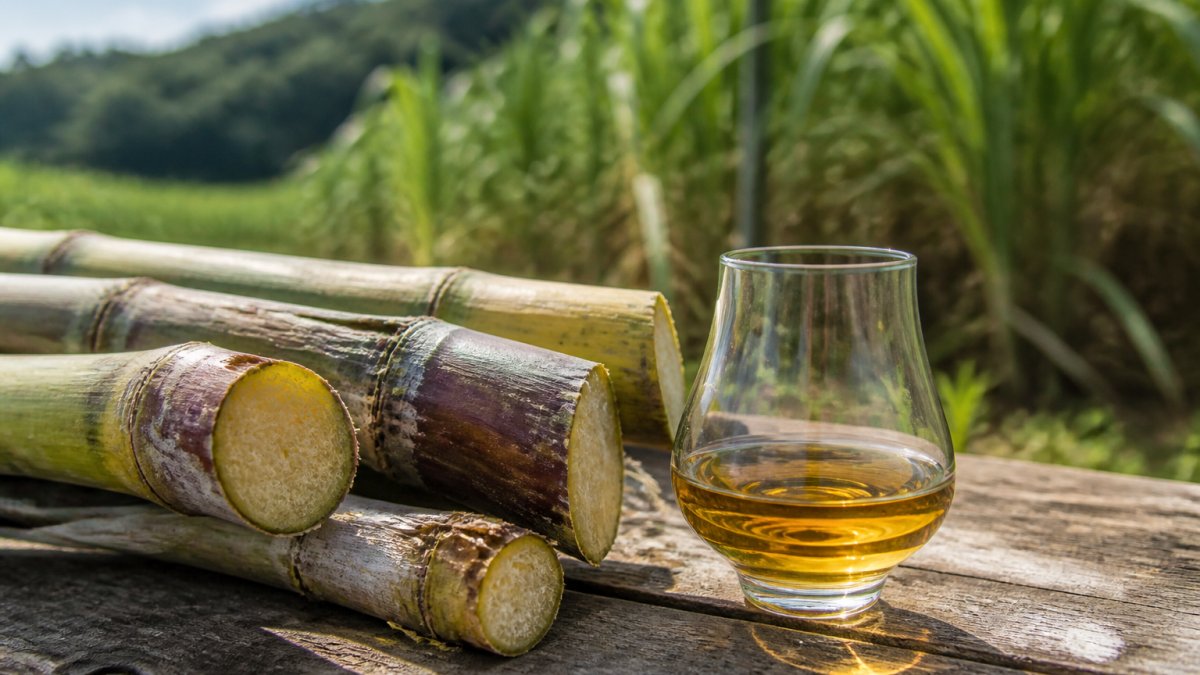
In practice, this means estate-grown cane tends to produce rum with more distinct tropical fruit, grassy, and floral notes. You taste the origin rather than the additive.
Solar Reserve 8, our single-origin eight-year-old from the Dominican Republic, is made from fresh cane juice distilled by Alcoholes Finos Dominicanos and aged in once-used ex-bourbon American oak. The tasting notes run to sweet mango, toffee, coconut, hazelnut, and a velvety vanilla finish. None of that complexity comes from a flavour house.

The Environmental Impact of Rum Production Across Its Lifecycle
The environmental impact of rum production spans five stages: cane cultivation, distillation, ageing, packaging, and shipping and disposal. Each carries a different footprint, and the biggest gains come from the first two, but the stage buyers most often overlook is the last one.
Cane cultivation dominates water use and land pressure. Sugarcane is a thirsty crop, and irrigation accounts for the largest share of a distillery's water footprint. Producers who grow or directly contract their cane can manage irrigation scheduling, soil health, and harvest timing.
Distillation is energy-intensive. Pot stills and column stills both require heat, and the fuel source matters enormously. Distilleries investing in renewable energy, bagasse-fired boilers, solar, or grid mixes with a high renewable share, cut carbon emissions at the point where they are highest.
Waste handling is the third lever and the easiest to verify. Rum production generates bagasse, spent wash (the liquid residue from distillation), and other by-products. Better operations return spent wash to fields as fertiliser, burn bagasse for power, and run close to zero-waste production.
Ageing and packaging are smaller but not trivial. Ex-bourbon casks are reused rather than newly manufactured, avoiding the carbon cost of new cooperage.
Shipping and disposal complete the picture. Rum shipped from the Caribbean to the UK carries a transport footprint, and how the empty bottle is disposed of at the end of its life adds a final increment.
When comparing two bottles, ask which lifecycle stage each producer is strongest on. A brand that is excellent on cultivation but silent on packaging is giving you half the picture, and the half that is easiest to market.
Rum Made Without Added Sugar: What the Label Does Not Tell You
Rum made without added sugar contains nothing beyond what came out of the still and the cask. That sounds obvious. It is not, because most rum labels are not required to disclose added sugar, and many premium bottles contain a surprising amount of it.
Added sugar, sometimes listed as dosage or simply omitted, is used to soften harsh spirit and add body. It works. It also means the flavour you are tasting is partly confectionery rather than distillation.
For anyone building cocktails, this matters practically. A sweetened rum throws off the balance of a Daiquiri or a Rum Old Fashioned, because you are already adding sugar syrup. A dry rum gives you control.
Solar Reserve 55 is bottled additive-free at 43% ABV, with natural caramel, toffee, and vanilla notes coming from the cask rather than the bottling line. It picked up Gold at The Spirits Business Rum & Cachaça Masters 2026 in the Ultra Premium Gold Rum category and 2 Stars at the Guild of Fine Food Great Taste Awards 2026. That is the kind of recognition a rum earns when it has nothing to hide behind.

| What the label shows | What it usually means | What to look for instead |
|---|---|---|
| "Premium" | No legal definition | Named distillery and country of origin |
| No sugar listed | Sugar may still be present | Explicit "no added sugar" or "additive free" |
| "Aged" | Minimum age unclear | Stated age in years |
| Origin country only | Cane source unknown | Estate-grown or single-origin claim |
How to Spot Genuine Sustainable Caribbean Rum Brands
Genuine sustainable Caribbean rum brands share three traits: they name their distillery, they explain their cane supply, and they publish verifiable certification. Anything short of that is a story, not a supply chain.
Start with the distillery. If a brand cannot tell you which distillery made the rum, it is almost certainly buying bulk spirit and blending it. That is not automatically bad rum, but it is not a traceable one.
Next, ask about the cane. Estate-grown, locally sourced, or single-origin claims should come with a region and, ideally, a named farm or grower group. Vague references to "the Caribbean" tell you nothing.
Then check certification. Sugarcane certification programmes and recognised environmental standards exist, and a serious producer will say which ones it holds. If a brand claims sustainability with no third-party verification at all, treat the claim as aspirational.
Finally, look at the ageing and bottling story. Where the rum was aged and who bottled it both affect quality and accountability. Our rums are aged at origin in the Caribbean and bottled by Scottish cask masters, which means two sets of specialists have signed off on the liquid.
Community, Labour and Land: The Caribbean Side of the Story
Sustainability in Caribbean rum is not only about carbon. It is about who grows the cane, who works the distillery, and whether the money stays in the region, and the answers differ sharply from island to island.
Labour. Sugarcane agriculture supports employment and livelihoods across growing regions, but the quality of that work varies. The difference between estate-grown and commodity sourcing is often the difference between a farmer with a long-term contract and a farmer exposed to global price swings. Estate or long-term contract arrangements give growers visibility of demand, which supports investment in equipment and land.
Land. Cane is a demanding crop. How a producer manages soil, water, and rotation determines whether the land is still productive in twenty years. Monoculture without rotation depletes soil; over-irrigation salinises it; clearing new land for cane destroys the very ecosystems that make the region attractive.
Water. Water use is the Caribbean-specific pressure point that general sustainability guides miss. Sugarcane is water-intensive, and many growing regions face seasonal scarcity or competing demands from tourism and domestic supply. Distilleries that manage irrigation directly can reduce draw during dry periods; those buying on the open market cannot.
Regional differences. "Caribbean rum" covers a dozen islands with very different production traditions and labour histories. Jamaican pot still rum, Spanish-style column distillation, and French Caribbean rhum agricole made from fresh cane juice each carry different supply chains, different land pressures, and different community relationships.
Common Mistakes When Buying Sustainable Caribbean Rum
The most common mistake is treating "sustainable" as a flavour category. It is a sourcing claim, and it says nothing on its own about how the rum tastes or how it was aged.
The second mistake is assuming price equals provenance. A high price can reflect small-batch production, long ageing, or simply a luxury markup. It does not confirm that the cane was grown responsibly. Price is a signal, not proof.
Third, buyers often overlook the added sugar question entirely. If you are mixing cocktails, a dry, additive-free rum behaves very differently from a sweetened one, and the label rarely makes this clear.
Fourth, people buy on country of origin alone. "Caribbean rum" covers a dozen islands with very different production traditions, from Jamaican pot still funk to Spanish-style column distillation. Knowing which style you want narrows the field fast.
The fix is straightforward: buy from producers who publish their distillery, their cane source, and their ageing process, and start with a small bottle before committing to a full-size one.
Conclusion: Drinking Better, Not Just More Expensively
The challenge with sustainable rum is verification. Anyone can print a leaf on a label, and few brands will tell you where the cane actually came from.
We built SolarRum to answer that question directly. Our rums come from distilleries using locally grown estate sugarcane, are bottled by Scottish cask masters, and are made without added sugar. The Solar Reserve Discovery Duo at £101.00 pairs Solar Reserve 55 and Solar Reserve 8 so you can taste both expressions side by side, and Solar Reserve 55 at £49.90 is a 95-point Gold Medal winner from the 2025 London Spirits Competition.

Get started with SolarRum and taste what a fully traceable Caribbean rum actually delivers in the glass.
Frequently Asked Questions
What are the benefits of sustainably sourced Caribbean rum?
Sustainably sourced Caribbean rum supports local farmers and communities, reduces the environmental impact of rum production through renewable energy and waste reduction, and often delivers a cleaner flavour because nothing is added to mask the spirit. Estate-grown sugarcane means the cane is pressed close to where it is grown, so it reaches the distillery fresh. For buyers, the practical benefits are traceability, fewer additives and a bottle that supports Caribbean agriculture rather than extractive supply chains.
How can you tell whether a rum is sustainably produced?
Look for named distilleries, specific estates and certification programmes on the label or website, rather than vague phrases like 'natural' or 'eco-friendly'. Estate-grown sugarcane rum usually states the farm or region. Rum made without added sugar will often declare 'no added sugar' or 'additive free'. If a brand cannot tell you where its cane comes from or how its waste is handled, treat the sustainability claim as marketing until proven otherwise.
Does sustainable rum taste different from mass-produced rum?
It often does, though not because sustainability is a flavour ingredient. Fresh, locally pressed cane and careful distillation preserve natural notes of tropical fruit, caramel and vanilla. Rum made without added sugar tends to taste drier and more spirit-forward, which many drinkers find cleaner in a Daiquiri or Rum Old Fashioned. Heavier, sweetened rums can taste rounder but also flatter. The difference is most obvious when you taste the two side by side.
What does estate-grown sugarcane mean for rum?
Estate-grown sugarcane means the distillery or its partner farm grows and presses the cane itself, rather than buying imported syrup or molasses from anonymous sources. Cane starts losing freshness quickly after cutting, so pressing close to the field preserves more of its character. It also makes traceability far easier: the producer can show exactly which land the cane came from, how it was farmed and what happened to the by-products.