

Table of Contents
- What Makes a Rum Right for a Classic Daiquiri
- The Best White Rum for Daiquiri Mixing
- White Rum vs Dark Rum for Daiquiri: What Changes in the Glass
- Aged Rum Daiquiri: When Barrel Character Belongs in the Shaker
- Classic Daiquiri Recipe and Method
- Choosing by Flavour, Proof and Budget
- Common Mistakes to Avoid
- Frequently Asked Questions
Last Updated: October 9, 2026
What Makes a Rum Right for a Classic Daiquiri
The best rum for a classic daiquiri cocktail is a clean, dry white rum with enough body and character to stand up to fresh lime and sugar without turning heavy or cloying.
A Daiquiri is unforgiving. Three ingredients, no place to hide. If the rum is thin, the drink tastes watery. If it is sweetened or heavily dosed, the balance tips into syrup. If it is too oaky, the lime fights the barrel and both lose.
That is why the daiquiri rum you choose matters more than the shaker, the ice or the glass. Get the spirit right and the cocktail almost makes itself.
The Three-Part Balance Test
Judge any candidate rum on three things before it goes near a shaker.
- Acidity tolerance: Does the rum stay bright when lime is added, or does it go flat and dull?
- Body: Does it coat the tongue, or does it vanish into dilution after ten seconds of shaking?
- Residual sweetness: Is the sweetness from the spirit itself, or was sugar added at bottling? Added sugar masks the lime and makes the drink taste manufactured.
A rum that passes all three will make a clean, bracing Daiquiri. One that fails any of them will need you to compensate with less syrup or more lime, which is a warning sign, not a fix.
How to Taste Rum Before You Commit It to a Cocktail
Taste the rum neat first, then taste it again with a small squeeze of lime. This is the fastest way to predict how it will behave in the glass.
Neat, look for aroma, body and finish. With lime, watch what happens to the fruit. A rum with genuine grassy or tropical notes will lift when acid hits it. A rum that relies on added sugar will collapse into a sweet, muddled mess.
If you can, make a small test Daiquiri with half the usual syrup. A well-made rum needs less sweetening than you think.
The Best White Rum for Daiquiri Mixing
The best white rum for a daiquiri is an unaged or lightly aged rum with a dry finish and real flavour, not a neutral spirit.
White rum is not automatically flavourless. The category covers everything from charcoal-filtered spirits with almost no character to unaged pot still rums that are wildly aromatic. For a Daiquiri you want the middle ground: enough personality to taste like rum, enough restraint to let the lime lead.
At SolarRum, our Solar Reserve 55 is a golden blend rather than a white rum, and it is worth understanding why it still works beautifully here.

Wine and Spirit Trade Association guidance on spirit labelling and categories
Blanco, Unaged and Light: What the Labels Actually Mean
Blanco and white describe colour, not age. Many white rums are aged for years in oak and then filtered to remove the colour, which leaves the flavour behind. Unaged means exactly that: no time in wood at all. Light is the vaguest term of the three and tells you almost nothing about production.
Read the ABV instead. Rums bottled around 40% to 43% are the sweet spot for shaking. Overproof rums at 57% and above will make a punchy, bracing Daiquiri, but you must adjust your proportions or the alcohol will dominate. Lower-strength rums dilute too quickly and leave the drink tasting thin.
White Rum vs Dark Rum for Daiquiri: What Changes in the Glass
Swapping white rum for dark rum turns a Daiquiri into a different drink, not a variation of the same one.
The classic Daiquiri is built on white rum because the drink is designed to taste bright and clean. Dark rum adds weight. That is not a flaw, it is a choice, and plenty of drinkers prefer it.
Where it goes wrong is with heavily sweetened dark rums. Many mass-market dark expressions carry added sugar and colouring, and in a three-ingredient cocktail that sweetness has nowhere to hide.
If you are moving from white to dark, drop the syrup by a quarter and taste before you serve. The barrel often brings enough perceived sweetness on its own.
Aged Rum Daiquiri: When Barrel Character Belongs in the Shaker
An aged rum daiquiri works when the rum has genuine cask character and no added sugar. Maturation in ex-bourbon American oak gives vanilla, toffee and soft spice, and those notes pair well with lime when the spirit stays dry.
This is where Solar Reserve 8 earns its place. It is a single origin eight year old Dominican Republic rum, distilled from fresh cane juice in column stills and matured for eight years in once-used ex-bourbon American oak.

In a Daiquiri, that profile turns the drink into something closer to a rum sour with a cask backbone. We would cut the simple syrup to around half and use a slightly heavier hand with the lime. The result is a Daiquiri you sip rather than drain.
Classic Daiquiri Recipe and Method
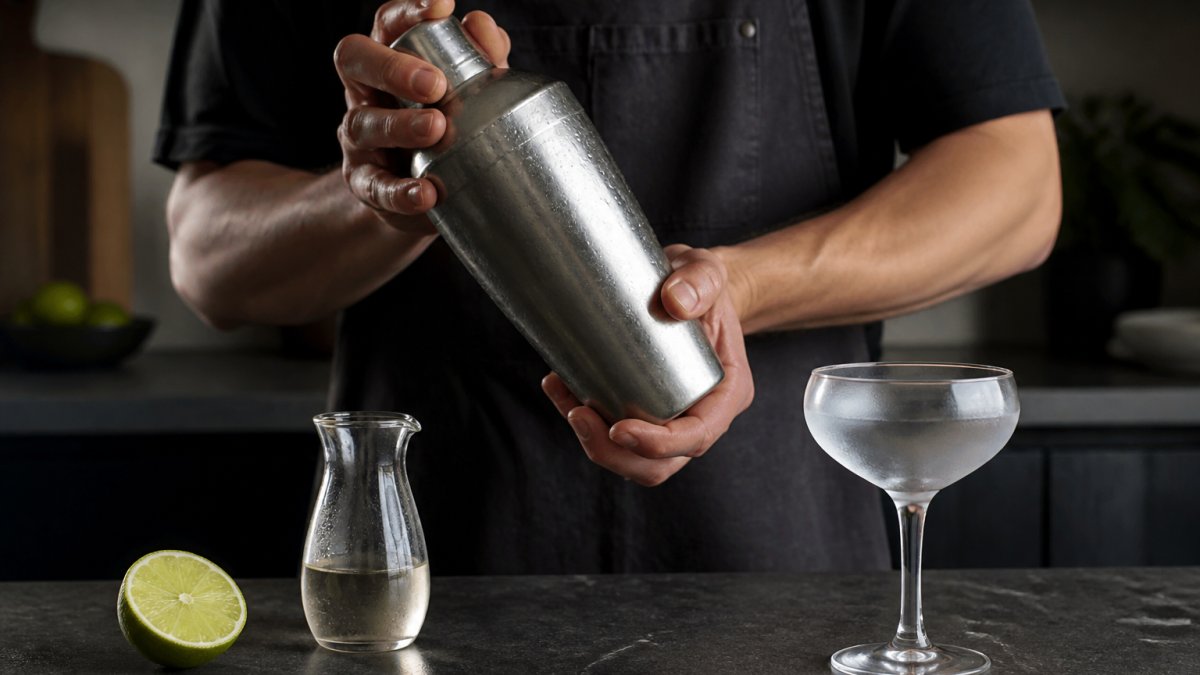
The classic Daiquiri recipe is 60ml white rum, 25ml fresh lime juice and 15ml simple syrup, shaken hard with ice and strained into a chilled coupe. That is the whole drink. Everything that follows is technique.
Ingredients and Proportions
- 60ml rum, ideally 40% to 46% ABV and free from added sugar
- 25ml fresh lime juice, squeezed to order, never bottled
- 15ml simple syrup, made one part sugar to one part water
The 2:1:1 ratio of rum to lime to syrup is the starting point, not a law. If your rum is on the dry side, nudge the syrup up. If it carries sweetness, pull it back. Fresh lime is non-negotiable; the bottled stuff tastes metallic and will ruin the drink.
Shaking, Straining and Serving
- Chill your coupe glass in the freezer for at least ten minutes.
- Add rum, lime juice and syrup to a shaker.
- Fill the shaker two-thirds with ice and shake hard for 12 to 15 seconds.
- Double strain into the chilled coupe to catch ice shards and pulp.
- Garnish with a thin lime wheel or a twist of lime peel.
Shake longer than feels comfortable. Dilution is an ingredient here, and a rushed shake leaves the drink hot and sharp.
Choosing by Flavour, Proof and Budget
Pick your rum by matching flavour preference to proof, then let budget and availability decide the specific bottle. This is the decision guide most roundups skip: instead of crowning one winner, it maps what you like to what you should buy.
| If you prefer | Choose | Why it works | Watch for |
|---|---|---|---|
| Bright, crisp, classic | Unaged or lightly aged white rum, 40-43% ABV | Lets lime lead | Thin body if over-diluted |
| Grassy, complex, characterful | Blended rum with a pot still component | Adds depth and funk | Reduce syrup slightly |
| Rounded, cask-led, sipping style | Aged rum, 43-46% ABV | Vanilla and toffee with lime | Added sugar in cheap bottlings |
| Punchy, bracing, spirit-forward | Overproof rum, 57%+ | Intense flavour, less dilution | Adjust proportions carefully |
Budget tiers and availability
Prices and stock vary by market, so treat these as bands rather than fixed figures. The gap between a workable mixing rum and a genuinely good one is smaller than the gap between a good one and an expensive one. Spend in the middle and put your money into fresh limes instead.
- Affordable: standard white rums at 37.5-40% ABV. Fine for a clean, crisp Daiquiri if you accept a lighter body and adjust syrup down slightly.
- Mid-range: additive-free white or lightly aged rums at 40-43% ABV. The sweet spot for most home bartenders.
- Premium: aged or pot-still-led rums at 43-46% ABV. Worth it when you want cask character or funk to carry the drink.
Substitutions when your first choice is unavailable
- Aged instead of white: drop the syrup by about a quarter and taste before serving; barrel character brings perceived sweetness.
- Agricole instead of molasses rum: expect grassy, vegetal notes and a drier finish; keep the syrup as written and add a touch more lime if it feels flat.
- Overproof instead of standard: dilute with slightly more ice or a splash of water, or reduce the rum to 50ml and keep lime and syrup unchanged.
How proof changes the balance
Alcohol strength affects dilution, aroma and the lime-sugar balance. A higher-proof rum needs more shaking time or a small splash of water to reach a drinkable strength, but it also carries more aroma and body through the ice. A lower-proof rum dilutes faster, so the same shake can leave the drink thin. The practical rule: taste at 40% ABV with the standard 60:25:15 ratio, then adjust syrup by 5ml increments and lime by 5ml increments until the drink tastes bright and balanced rather than sharp or sweet.
Common Mistakes to Avoid
The biggest mistake is treating the Daiquiri as a drink you can improvise. It has three ingredients, so every error shows.
- Using bottled lime juice. It tastes cooked and flat. Squeeze fresh, every time.
- Over-sweetening. Start with 15ml of syrup and only add more after tasting.
- Under-shaking. A short shake leaves the drink sharp and warm. Go the full 12 to 15 seconds.
- Serving in a warm glass. A room-temperature coupe ruins an otherwise perfect cocktail.
- Assuming colour equals quality. A clear rum can be far more characterful than a dark one.
Avoid those five and you are already ahead of most home bartenders.
A great Daiquiri comes down to one decision: the rum. Everything else is technique you can learn in an afternoon. At SolarRum, we bottle Caribbean rums without added sugar, aged in American bourbon oak casks and finished by Scottish cask masters, so the spirit carries the drink rather than sweetening it. Our Solar Reserve 55 brings Jamaican pot still character and Dominican smoothness to a classic Daiquiri, while Solar Reserve 8 suits a richer, cask-led version. Explore the range and mix a Daiquiri that tastes of the rum, not of sugar.
Frequently Asked Questions
What is the best rum to use in a classic daiquiri?
A dry, clean white rum at around 40-43% ABV works best, because lime and sugar need a spirit that does not fight them. Look for unaged or lightly aged column still rum with restrained sweetness and a little grassy or citrus character. Solar Reserve 55, a golden blend of Dominican column still rums with a Jamaican pot still component, sits at 43% ABV and carries natural caramel, toffee and vanilla notes with a light grassy funk, so it holds up in a Daiquiri while adding more depth than a plain blanco.
Is white or dark rum better for daiquiris?
White rum is the traditional choice and keeps the drink crisp, bright and lime-forward. Dark rum brings molasses, oak and heavier fruit, which pushes the cocktail toward something closer to a rum Old Fashioned. If you want the classic profile, stay with white or lightly aged rum. If you want a richer, sweeter finish, a dark or aged rum works, but reduce the syrup slightly so the drink does not tip into cloying territory.
Can you use aged rum in a classic daiquiri?
Yes, and it is one of the most rewarding variations. An aged rum daiquiri swaps the crispness of a blanco for vanilla, toffee and soft oak. Solar Reserve 8, an 8-year-old Dominican rum matured in ex-bourbon American oak, brings mango, toffee, coconut and baking spice to the glass at 46% ABV. Because it is bottled without added sugar, you may want to dial the syrup back to 15ml to keep the balance in check.
How does the choice of rum change a daiquiri's flavour?
The rum decides the backbone of the drink. A light, unaged rum gives a clean, dry, citrus-led Daiquiri. A pot still Jamaican rum adds funky, overripe fruit notes that cut through the sugar. A column still aged rum layers vanilla, caramel and oak on top of the lime. Proof matters too: a 43-46% ABV rum survives dilution from shaking better than a 37.5% bottle, so the finished drink tastes fuller rather than watery.