
Table of Contents
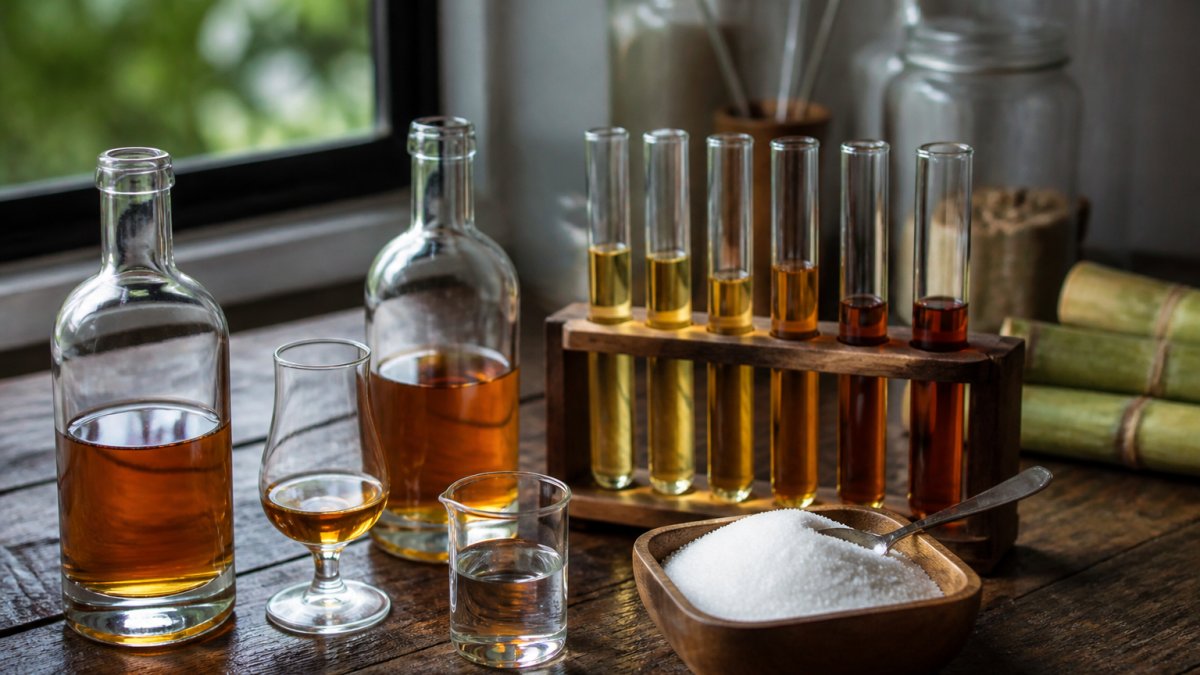
- Why Added Sugar Is So Hard to Spot in Rum
- How to Test Rum for Sugar at Home
- How Much Sugar Is in Rum? Reading the Numbers
- A Rum Sugar List: What to Expect by Style
- What Rum Labels Do and Do Not Have to Disclose
- How Added Sugar Changes Taste, Texture and Cocktails
- Frequently Asked Questions
Last Updated: October 8, 2026
Why Added Sugar Is So Hard to Spot in Rum
Sugar in rum hides in plain sight. Unlike whisky or gin, rum has no legal rule forcing producers to declare added sugar on the label. A bottle can taste rich and syrupy and still list nothing but rum and water. This guide from SolarRum shows you how to spot it anyway.
The gap between what a label says and what is actually in the bottle is wider in rum than in almost any other spirit. Many Caribbean producers add cane syrup, molasses or caramel after distillation. Some do it to soften a harsh young spirit. Others do it to add colour and body.
The result? Two rums at the same age and strength can taste wildly different, and the sweeter one is not always the older or better one.
Added sugar changes more than flavour. It masks faults, adds mouthfeel, and can make a cheap blend taste premium. For anyone who sips neat or builds cocktails, that matters.
Below, we break down exactly how to test a bottle at home, what the numbers mean, and what to expect by style. The methods are simple, cheap, and you can run them tonight.
How to Test Rum for Sugar at Home
You can test rum for sugar at home with three low-tech methods: a palm rub, a viscosity check, and a hydrometer reading. None of them is perfect on its own, but together they give you a clear picture.
Start with the bottle at room temperature. Cold rum thickens and throws off your readings. Pour a small measure into a clean glass and let it sit for a minute.
The Palm Rub and Viscosity Check
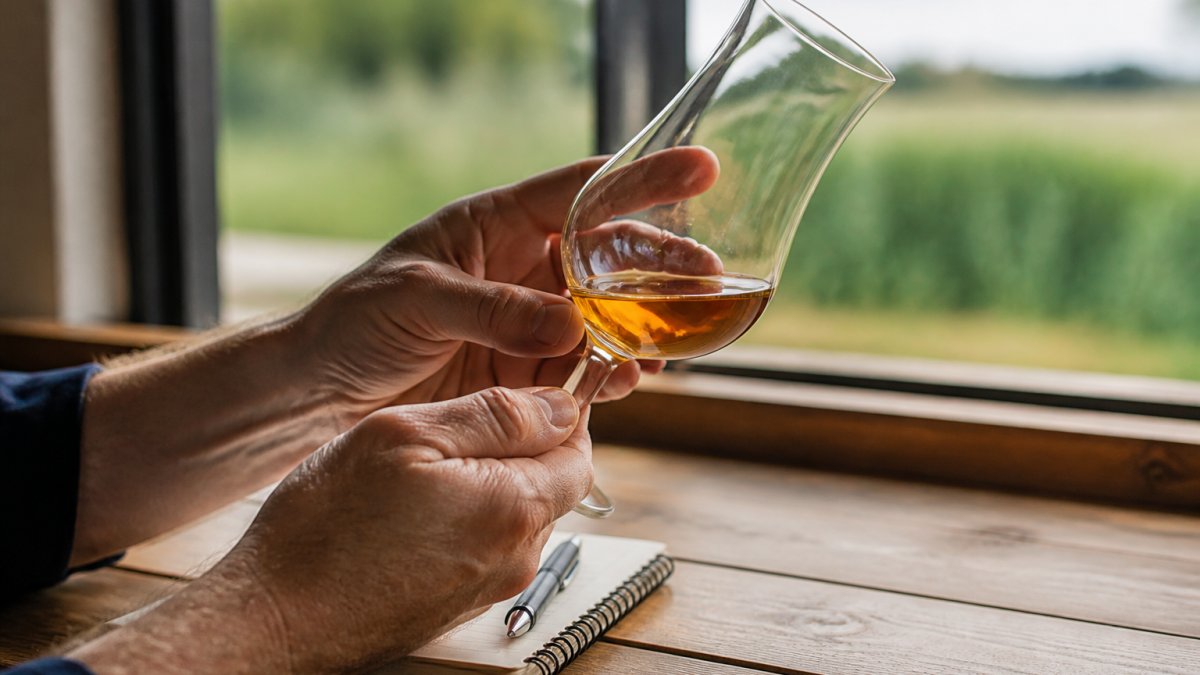
Rub a few drops between your palms and let the alcohol evaporate. A dry rum leaves little behind. A sweetened rum leaves a sticky, tacky film that lingers.
Next, tilt the glass and watch the liquid run back down. Thin, fast legs suggest a dry spirit. Slow, thick legs that cling to the glass point to added sugar or a heavy barrel influence.
A common mistake is reading too much into legs alone. Age in a hot climate also builds body and viscosity. So treat this as a clue, not proof.
What a Hydrometer Can and Cannot Tell You
A hydrometer measures density, and density shifts when sugar is present. That makes it useful, but only up to a point.
Here is the catch: alcohol is less dense than water. So a high-strength rum can read like a dry one even when sugar is there. You need the exact alcohol by volume to correct for it.
- Can tell you: whether a spirit is unusually dense for its strength
- Cannot tell you: the exact sugar content without a hydrometer chart and precise ABV
- Best used for: comparing two bottles of the same strength side by side
How Much Sugar Is in Rum? Reading the Numbers
How much sugar is in rum varies from zero to over 40 grams per litre, depending on the brand and style. A bone-dry rum sits at or near zero. A heavily dosed one can carry more sugar than a can of soft drink. This wide spectrum of sweetness often leads drinkers to seek out alternatives like sugar-free tequila to avoid the hidden additives found in many mass-produced spirits.
The numbers are usually expressed in grams per litre (g/L). Here is a rough scale to work from:
| Sugar Level (g/L) | What It Means | How It Tastes |
|---|---|---|
| 0-5 | Essentially dry | Clean, spirit-forward |
| 5-15 | Lightly sweetened | Subtle roundness |
| 15-30 | Noticeably sweet | Soft, dessert-like edge |
| 30+ | Heavily dosed | Syrupy, liqueur-like |
Most mass-market golden rums sit in the middle bands. Premium sipping rums tend to sit in the bottom two.
The tricky part is that no producer is obliged to publish these figures. You are often working from independent lab tests and enthusiast databases rather than official data. That is exactly why learning to test at home pays off.
A Rum Sugar List: What to Expect by Style
A rum sugar list is a rough guide to how much sugar you can expect from each style, not a fixed rule. Style tells you the likely range, but the producer decides the final number.
Here is what to expect:
- White and overproof rums: usually dry, built for mixing
- Golden and aged rums: often lightly to moderately sweetened
- Navy-style rums: traditionally dry, though some modern versions add sugar
- Spiced rums: almost always sweetened, and often heavily
- Premium single-origin and vintage rums: more likely to be additive-free
Spiced rums are the clearest case. Sugar is part of the recipe, so the sweetness is expected. The confusion comes from aged rums, where a little sugar can pass as "smoothness."
If you want a bottle you can trust to be dry, look for producers who state "no added sugar" directly. SolarRum builds its range that way: both the SR55 and the 8-year-old SR8 are made without added sugar, so what you taste comes from the cask, not the syrup.
What Rum Labels Do and Do Not Have to Disclose
Rum labels are not required to list added sugar, so a missing mention tells you nothing. This is the single biggest reason sugar is so hard to pin down.
Compare that with wine, where ingredients are increasingly declared, or with food, where sugar appears on the nutrition panel. Rum sits in a gap.
What labels usually do show:
- Alcohol by volume (ABV)
- Country or region of origin
- Age statement, if any
- Whether it is a blend or single origin
What they often leave out:
- Added sugar, syrup or caramel
- Chill filtration
- The true age of the youngest spirit in a blend
The word "smooth" on a label is a warning sign, not a promise. It often signals sugar or a heavy dose of glycerol. Age statements can mislead too, since a "12-year" blend only needs a splash of 12-year spirit.
How Added Sugar Changes Taste, Texture and Cocktails
Added sugar changes three things: how the rum tastes, how it feels in the mouth, and how it behaves in a cocktail. All three matter more than most drinkers realise.
On the palate, sugar rounds off sharp edges. It adds a soft, coating texture that reads as "smooth." The trade-off is that it can bury the delicate notes you actually paid for, like the fruit and spice that come from a good cask.
In cocktails, the effect is bigger. A Daiquiri is rum, lime and sugar, nothing else. If your rum is already sweet, you need less syrup, and the balance shifts fast. A Rum Old Fashioned built on a sweet rum turns cloying.
This is where a dry rum earns its place. A spirit-forward rum lets you control the sweetness yourself. You decide how much sugar goes in, rather than the producer deciding for you.
The same logic applies to sipping. A dry, cask-aged rum shows its full range: vanilla, oak, dried fruit, warm spice. Sugar flattens that range into one note.
You can taste that difference directly in a bottle like SolarRum's Solar Reserve 8, an 8-year-old Dominican rum aged in ex-bourbon American oak. Its notes of mango, toffee and baking spice come from the barrel, not a dosing tank. That is the whole point of drinking rum additive-free.
Frequently Asked Questions
Does rum naturally contain sugar after distillation?
No. Distillation strips sugar from the liquid, so a freshly distilled rum contains none. Any sweetness you taste in a finished bottle comes from one of two places: naturally occurring wood sugars and vanillin extracted from the cask during ageing, or sugar added after maturation. Barrel-derived sweetness is subtle and integrated; added sugar is more direct and syrupy. This is why two rums with the same age statement can taste wildly different in sweetness.
Can you taste added sugar in rum, or do you need a lab test?
You can often detect it by mouthfeel. Added sugar gives rum a thick, coating texture and a sweetness that lingers on the lips rather than fading. A dry, unadulterated rum feels lighter and finishes cleaner. For a rough home check, rub a few drops between your palms and wait: sugary rums leave a sticky residue, while additive-free rums evaporate with little trace. Lab testing gives exact figures, but taste and texture catch most cases.
Does a rum label have to list added sugar?
Not currently. There is no legal requirement for rum sold in the UK to declare added sugar on the label, and the same applies across most major markets. Some producers voluntarily state 'no added sugar' or 'additive free', but this is a marketing choice, not a regulatory obligation. That gap is exactly why independent rum sugar lists exist, and why learning to test a bottle yourself is more reliable than trusting the front label alone.
Are online rum sugar lists reliable?
They vary widely in quality. The better ones publish their testing method, typically density measurement or laboratory analysis, and give a figure in grams per litre alongside the bottle tested. Treat any list without a stated method as indicative rather than definitive. Use them as a starting point, then verify with your own taste and texture check. A rum listed at zero grams per litre should feel noticeably drier than one listed at 20 g/L or more.
Most rum drinkers never learn to tell added sugar from natural sweetness, and the labels will not help them. That leaves you relying on taste, texture and a few simple tests. If you would rather skip the guesswork, choose a bottle that states its position plainly. SolarRum bottles additive-free Caribbean rum, with no added sugar and full cask ageing, so every note comes from the spirit itself. Explore the Solar Reserve range and taste rum the way the cask intended.