
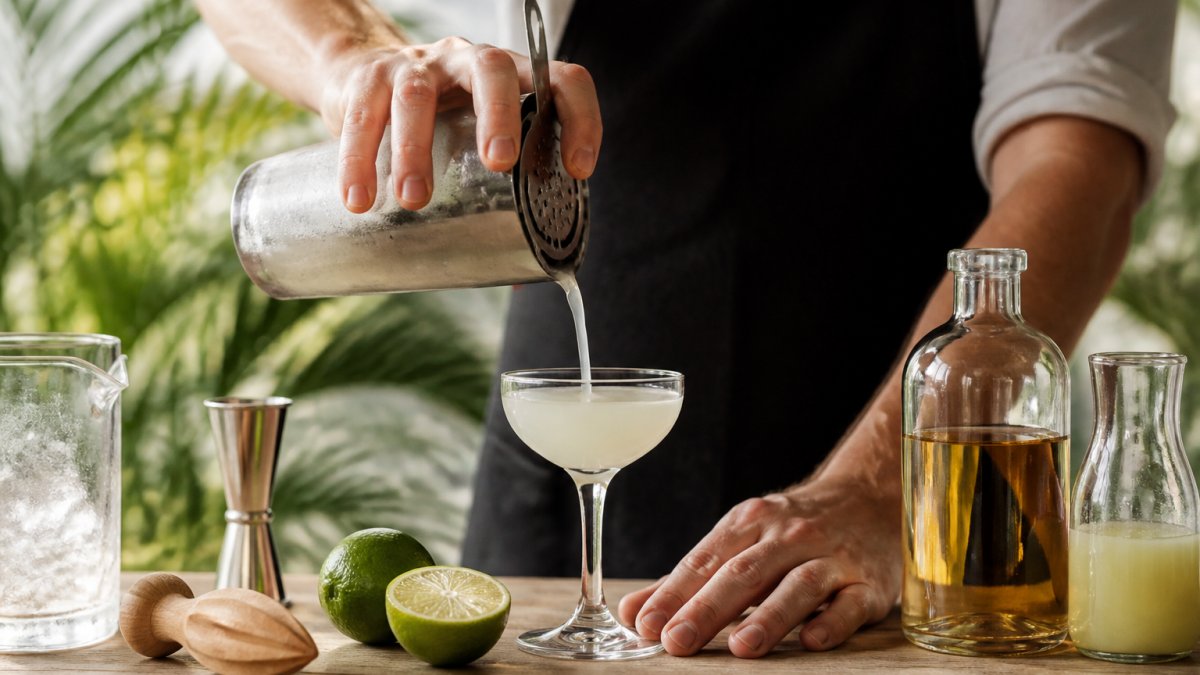
Table of Contents
- Why the Perfect Daiquiri Is a Test of Technique
- Choosing the Best Rum for Daiquiri
- Classic Daiquiri Recipe Ratios and the 2:1:1 Rule
- Essential Home Bar Tools for Cocktails
- Step-by-Step: How to Craft a Perfect Daiquiri
- How to Batch Cocktails for Events Without Losing Balance
- Dilution, Temperature and Troubleshooting Common Failures
- Conclusion: Raising Your Palate and Your Serve
- Frequently Asked Questions
Last Updated: October 4, 2026
Why the Perfect Daiquiri Is a Test of Technique
A Daiquiri is three ingredients: rum, lime, sugar. So why do so few home bartenders make a good one?
Because three ingredients leave nowhere to hide. There is no juice blend to mask a harsh spirit, no liqueur to cover a sour lime, no garnish to distract from a thin body.
At SolarRum, we bottle Caribbean rum without added sugar, which makes that test even sharper. The technique is simple, and it takes about four minutes to learn.
Choosing the Best Rum for Daiquiri
The best rum for a Daiquiri is a light or golden cane spirit with no added sugar, enough proof to hold its character against fresh lime, and clean tropical fruit notes rather than heavy oak. Rum is the only variable in a three-ingredient drink, so the style you pick decides the drink you get.
What Actually Separates One Rum From Another
Four things matter in the glass:
- Base material. Molasses-based rum tastes heavier and more caramelised; fresh cane juice (rhum agricole) tastes grassier and more pungent. Both work; they produce different drinks.
- Distillation style. Column stills give a cleaner spirit that lets lime lead. Pot stills retain more congeners, aromatic compounds carrying funk, tropical fruit and spice, for a rounder, more assertive Daiquiri.
- Age and cask. A short rest in ex-bourbon oak adds vanilla, coconut and soft spice. Long tropical ageing pushes toward dried fruit and baking spice, which can overwhelm lime.
Reading the Label for Added Sugar
There is no legal requirement to declare added sugar on a rum label in most markets, so you have to infer it. Three practical signals:
- Texture when swirled. A dry spirit beads and runs quickly down the glass. A heavily dosed rum coats and clings.
- Mouthfeel neat. If it feels syrupy rather than warming, it is likely dosed.
- Stated style. 'Premium sipping rum' or 'rich, smooth' often correlate with dosing; 'dry', 'no added sugar' or 'unsweetened' are the honest signals.
A quick test: pour a small measure, add a splash of water, and taste. Dosed rums stay sweet even after dilution; unsweetened rums open up and taste drier.
Matching Rum Style to the Drink You Want
- Column-still, lightly aged, unsweetened: the cleanest, most classic Daiquiri. Lime and cane lead.
- Pot-still Jamaican or heavy molasses: funkier and more tropical. Reduce syrup slightly; the rum brings its own weight.
- Rhum agricole: grassy and sharper. Works well with a touch less lime.
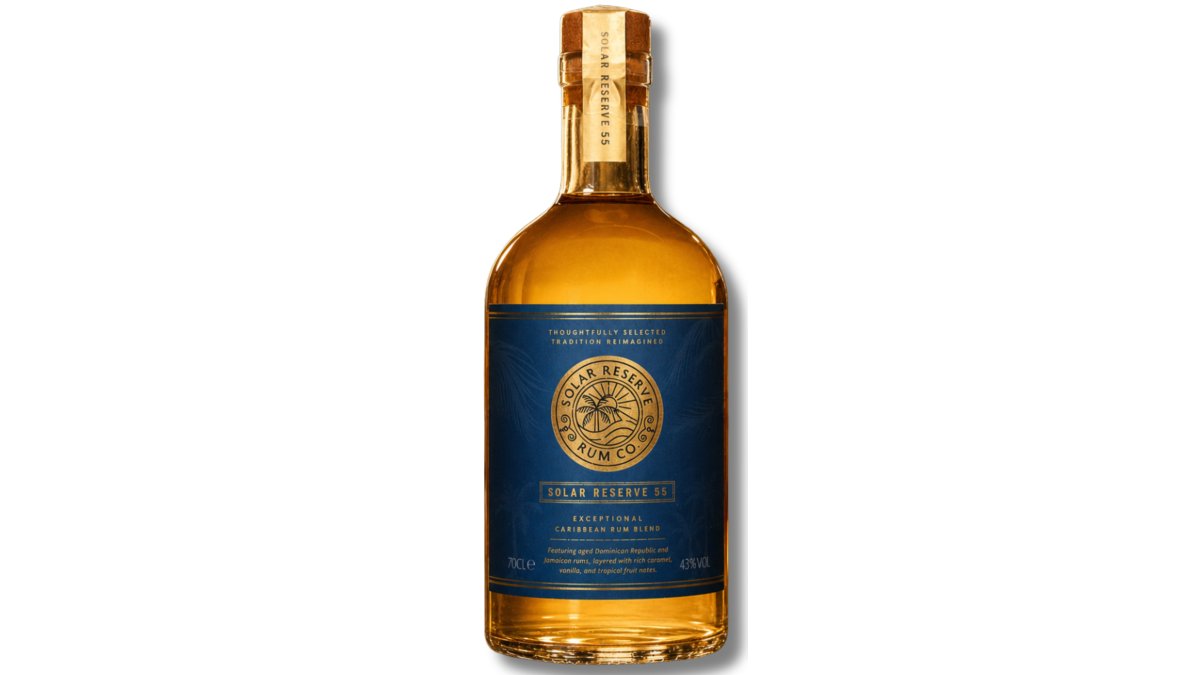
For a classic Daiquiri, we reach for Solar Reserve 55. It blends Jamaican pot still character with Dominican Republic smoothness, and it is bottled without added sugar.

Classic Daiquiri Recipe Ratios and the 2:1:1 Rule
The classic Daiquiri ratio is 2:1:1, meaning two parts rum to one part fresh lime juice to one part sugar syrup.
Why it works:
- 2 parts rum gives the spirit enough weight to lead the drink
- 1 part lime brings the acidity that makes it refreshing
- 1 part syrup softens the edge without turning it sweet
From there, adjust to taste. If your limes are sharp and thin-skinned, drop the syrup slightly. If your rum sits at a higher strength, a touch more dilution will help.
For reference, the widely cited International Bartenders Association official Daiquiri specification lists rum, lime juice and sugar syrup as the standard build, which confirms how little the recipe has changed in a century.
Essential Home Bar Tools for Cocktails
You need four things to make a proper Daiquiri, and one of them is ice.
The essentials:
- A cocktail shaker, Boston style or three-piece
- A fine mesh strainer for a clean pour
- A jigger or small measuring cup
Nice to have:
- A citrus squeezer, for more juice per lime
- A paring knife and board for garnish
- A small jug for batching syrup
Skip the blender, a frozen Daiquiri is a different, far less forgiving drink.
One more tool worth mentioning: a good bottle. The Solar Reserve Discovery Duo pairs our 55 blend with the 8 Year Old, so you can taste how two cane spirits behave in the same recipe.

Step-by-Step: How to Craft a Perfect Daiquiri
Here is the full method. Total time is about four minutes, and difficulty is beginner.
What you'll need:
- 60ml golden Caribbean rum
- 30ml fresh lime juice
- 30ml simple syrup
Step 1: Chill the Glass and Build the Mix [Time: 2 minutes]
Put your coupe glass in the freezer, or fill it with ice and water while you work. A warm glass will undo everything the shaker just did.
Add the rum, lime juice and syrup to the shaker. Fill it two-thirds with ice cubes. Fresh ice, not the slush from the bottom of the tray.
Expected result: A shaker that feels heavy and cold to the touch before you start.
Step 2: Shake Hard, Double Strain and Garnish [Time: 2 minutes]
Seal the shaker and shake hard for 12 to 15 seconds. You are not just mixing.
Then double strain: pour through the shaker's own strainer into your fine mesh strainer and on into the glass.
Garnish with a thin lime wheel or a twist of zest. Serve immediately.
Expected result: A pale, slightly cloudy drink with a fine frost on the glass.
How to Batch Cocktails for Events Without Losing Balance
Batching works, provided you leave the water out.
Combine the rum, lime juice and syrup in a jug in the same 2:1:1 ratio, multiplied by the number of guests. Chill it thoroughly in the fridge. Do not add ice or water to the jug, dilution happens at serving time, in the shaker.
A few practical notes:
- Mix the batch no more than four hours ahead; fresh lime fades
- Label the jug with the ratio you used
- Keep a second jug of syrup on hand for guests who prefer it sweeter
For a party of ten, 600ml of rum, 300ml of lime juice and 300ml of syrup gives you ten drinks with a little spare.
Dilution, Temperature and Troubleshooting Common Failures
Dilution is the most misunderstood part of cocktail making. It is not a flaw to be avoided. It is an ingredient, and in a Daiquiri it is roughly a quarter of the finished drink.
The Physics of Ice Melt
When you shake, the ice does two jobs at once: it chills the liquid and it melts into it. The melt is not incidental, it softens alcohol burn and rounds off sharp acid.
Three variables control how much water ends up in the glass:
- Ice surface area. Cracked or small ice melts fast and dilutes hard; large, dense cubes melt slowly and predictably. Aim for cubes roughly 2-3 cm across.
- Shake duration. 12-15 seconds of hard shaking adds roughly 20-25% of the drink's final volume as water. Shake for 8 seconds and you under-dilute; shake for 25 and you serve a watery drink.
- Starting temperature. Warm ingredients melt more ice before the shaker reaches equilibrium. Chill your rum and syrup if you can.
A useful mental model: a 120 ml pre-shake Daiquiri becomes roughly 145-150 ml after a proper shake. Closer to 130 ml and it will taste hot; closer to 170 ml and it will taste thin.
Why Cold Changes What You Taste
Cold blunts our perception of both sweetness and harshness, which is why a Daiquiri served at room temperature tastes cloying even when the ratio is correct. Temperature also affects aroma release: too cold and the rum's fruit notes disappear; too warm and the alcohol dominates.
The target is roughly 0-4°C at serving. That is why a pre-chilled glass matters, a warm coupe can raise the drink's temperature by several degrees within a minute.
Palate Calibration: Adjusting the Ratio to Your Rum
No single ratio is universal, because rums differ in residual sugar, ABV and aromatic intensity. The 2:1:1 rule is a starting point, not a law.
A practical calibration method:
- Make the drink at 2:1:1 with your chosen rum.
- Taste. Ask one question: is the lime leading, the rum leading, or the sugar leading?
- Adjust one variable at a time:
- Rum tastes buried: add 5 ml more rum.
- Lime tastes sharp or metallic: add 5 ml more syrup.
- Drink tastes flat or syrupy: reduce syrup by 5 ml, or switch to a drier rum.
- Drink tastes thin despite correct ratio: you are over-shaking; cut shake time.
- Note the final ratio on the bottle. Rums vary batch to batch, and so do limes.
Higher-ABV, unsweetened rums usually want slightly more syrup, while dosed rums want less. Winter limes tend to be sharper than summer limes, so the same recipe can taste different across the year.
Troubleshooting Table
| Problem | Likely Cause | Fix |
|---|---|---|
| Tastes watery | Over-shaken, or ice too small | Use 2-3 cm cubes; shake 12-15 seconds |
| Tastes harsh or hot | Under-shaken, warm glass, warm ingredients | Chill glass and ingredients; shake harder |
| Too sweet | Sweetened rum, or too much syrup | Switch to unsweetened rum; cut syrup by 5 ml |
| Too sharp | Limes unusually acidic, or under-ripe | Add 5 ml syrup; taste lime before juicing |
| Flat and dull | Old lime juice, or over-diluted | Squeeze fresh; reduce shake time |
| Cloudy with bits | Single strained | Add a fine mesh strainer |
| Aromas missing | Served too cold | Let the glass sit 30 seconds before drinking |
A Note on Ice Quality
Ice made from tap water with strong chlorine or mineral notes will taste of it once melted, and in a Daiquiri, a quarter of the drink is melted ice. Filtered water ice, made in trays a day ahead so it is dense and clear, gives a cleaner result. A well-made tray of ice, frozen once and used fully, also wastes less water than repeatedly dumping half-melted cubes.
Conclusion: Raising Your Palate and Your Serve
The gap between a mediocre Daiquiri and a great one is not a secret ingredient. It is fresh lime, honest measurement, hard shaking and a spirit that has nothing to hide.
When you are ready to put it into practice, Solar Reserve 8 brings deep mango, toffee and baking spice to a richer style of Daiquiri, while Solar Reserve 55 stays our everyday pick for a classic serve.

Get started with SolarRum and taste what a Daiquiri is supposed to be.
Frequently Asked Questions
What are the most common mistakes when making a daiquiri?
The usual culprits are warm ingredients, under-shaking and too much syrup. If the rum, lime and syrup are not ice cold before they hit the shaker, the ice melts unevenly and the drink turns watery before it is properly chilled. Shake hard for 12 to 15 seconds rather than a gentle rattle, and taste before serving. A daiquiri should sit on the sharp side of balanced, so start with less syrup than you think you need and adjust by a few millilitres.
Does a daiquiri need simple syrup or caster sugar?
Simple syrup is the better default because it dissolves instantly and gives you a repeatable measure, which matters when you are chasing a consistent perfect daiquiri. Caster sugar works if you shake long enough for the grains to dissolve, but it can leave a gritty texture and makes the ratio harder to judge. If you want a drier drink, cut the syrup back rather than swapping to sugar, and let the lime and cane spirit carry the flavour.
How do I batch daiquiris for a party?
Multiply the ratio by the number of servings, mix the rum, fresh lime juice and syrup in a large jug, then chill it thoroughly before guests arrive. Shake each serve to order if you have the time. Keep the mix in the fridge, not on the counter, and stir it before pouring so the citrus stays evenly distributed.
Which rum works best in a classic daiquiri?
A light or golden cane spirit with no added sugar gives the cleanest result. Column still rum brings softness and tropical fruit, while a small proportion of pot still rum adds grassy funk and depth. A blend that combines both, such as Solar Reserve 55 at 43% ABV, sits well in a daiquiri because its natural caramel and vanilla notes support the lime instead of fighting it. Avoid heavily sweetened or spiced bottlings, which unbalance the sugar-to-acid ratio.