

Table of Contents
- Why Scottish Cask Masters Matter: The Human Element Behind Every Great Cask
- What a Scottish Cask Master Actually Does
- Cask Maturation Techniques That Shape Premium Rum
- The Impact of Bourbon Casks on Rum Flavour
- How Cask Masters Manage Stock, Angel's Share and Cask Lifecycle
- Single Cask, Private Picks and Water Reduction
- How to Choose Premium Aged Rum: A Buyer's Framework
- Conclusion: Why the Cask Master's Judgement Still Decides the Bottle
- Frequently Asked Questions
Last Updated: October 3, 2026
Why Scottish Cask Masters Matter: The Human Element Behind Every Great Cask
Great rum is not made by a barrel. It is made by the person who decides which barrel, for how long, and when to stop. The question of why Scottish cask masters matter comes down to this: a cask is a tool, and a tool needs a hand. Scotland has spent centuries learning how wood, climate and time interact, and that knowledge now shapes some of the finest Caribbean rum on the shelf. At SolarRum, we bottle our Caribbean rums with Scottish cask masters precisely because their judgement is the difference between a good spirit and a memorable one. Below, we break down what these specialists actually do, how maturation techniques change flavour, and how to choose a premium aged rum without wasting money.
What a Scottish Cask Master Actually Does
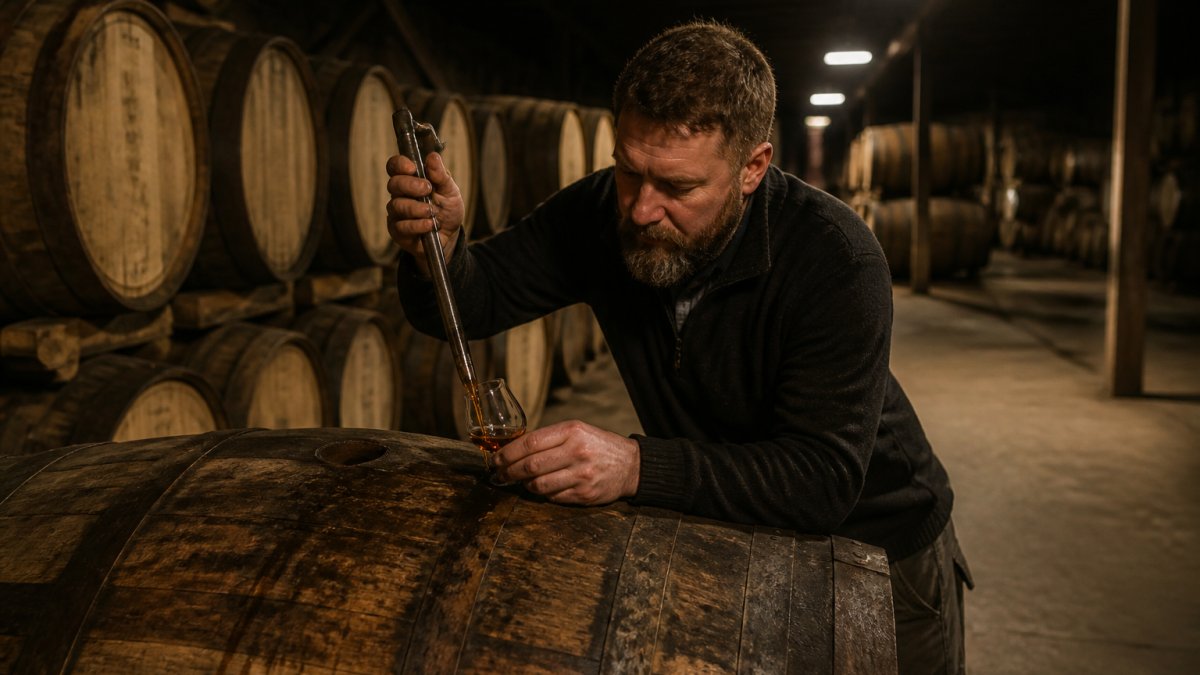
A cask master is the person responsible for the wood: sourcing casks, tracking each one through its maturation cycle, and deciding when a spirit is ready to leave the barrel.
It is a role built on stock control as much as on taste. Every cask is logged, sampled and assessed on a schedule, because a barrel that sits too long turns woody and bitter, while one pulled too early tastes thin. The cask master also manages the practical side: warehouse conditions, cask rotation, and the slow evaporation known as the angel's share.
Cask Management and Stock Control
Cask management is the discipline of knowing what you have, where it is, and what it is becoming. A working warehouse might hold thousands of casks at different ages, from different cooperages, in first-fill and refill states. Without a system, you lose track of your best stock.
A common mistake is treating all casks of the same age as interchangeable. They are not. Two barrels filled on the same day, from the same distillate, can taste completely different two years later because of where they sat in the warehouse and how much wood contact they received.
Master Distiller vs Cask Master
The master distiller controls what goes into the barrel. The cask master controls what happens next.
That split matters. Distillation sets the spirit character: the fruit, the funk, the weight. Maturation decides how that character develops, softens, and gains complexity. A distiller can produce a superb spirit that a careless cask programme ruins, and a modest spirit that careful woodwork elevates.
Cask Maturation Techniques That Shape Premium Rum
Cask maturation techniques determine roughly how a rum will taste before it is ever bottled. The variables are the cask's previous contents, its size, its age, and how many times it has been used.
First-Fill, Refill and Cask Seasoning
A first-fill cask is one being used for the first time by the rum producer. Because the wood still holds active compounds from its previous contents, a first-fill ex-bourbon barrel delivers more vanilla, caramel and oak than a cask that has already been used twice.
Cask seasoning is the period when a barrel is prepared or rested before it takes spirit. Refill casks have already held rum or another spirit, so they give a gentler, slower extraction, which suits longer maturation where you want complexity without aggressive wood.
| Cask Type | Flavour Impact | Typical Use |
|---|---|---|
| First-fill ex-bourbon | Strong vanilla, caramel, oak | Shorter maturation, bold profile |
| Refill | Softer, slower wood extraction | Longer ageing, subtle complexity |
| Re-seasoned | Balanced wood and prior-spirit notes | Blending and consistency |
The Impact of Bourbon Casks on Rum Flavour
The impact of bourbon casks on rum is the single biggest flavour decision most producers make. American oak, previously used to age bourbon, brings sweet vanilla, toffee and coconut notes that sit naturally alongside tropical fruit.
Lignin, Tannins and Wood Influence
Wood influence is chemistry, but it is chemistry you can taste. Lignin in the oak breaks down during maturation and releases vanillin and related compounds, which is where that vanilla cream note comes from. Tannins add structure, dryness and grip, and they are the reason an over-aged rum turns astringent.
How Cask Masters Manage Stock, Angel's Share and Cask Lifecycle
Cask lifecycle management is where a bottling programme either holds together or falls apart. Every barrel has a useful life, and the cask master decides when that life ends.
The angel's share is the portion of spirit lost to evaporation through the wood each year. In warm, humid Caribbean warehouses, that loss is significant, which is one reason tropical maturation develops flavour faster than cooler-climate ageing. It also means a cask filled at a given volume will not yield the same volume years later, and stock planning has to account for that shrinkage from day one.
Cask stock is finite. A cask that has given its best years is either retired, re-seasoned, or used for a different purpose entirely. Producers who ignore this end up with tired wood and flat spirit.
Single Cask, Private Picks and Water Reduction
A single cask bottling comes from one individual barrel, unblended, which means it reflects one cask's specific character rather than a house style. A private barrel pick is a cask selected by a buyer, bar or retailer for its own bottling.
Water reduction is the final lever. Cask strength spirit comes out of the barrel at high alcohol, and adding demineralised water brings it down to bottling strength. Add too much and you flatten the texture; add too little and the alcohol masks the fruit. Cask masters reduce slowly, tasting at each stage, because the difference between 46% and 43% is not cosmetic.
How to Choose Premium Aged Rum: A Buyer's Framework
Choosing premium aged rum comes down to reading the label for what it does not say. Here is a practical framework:
- Check for a stated age. NAS (No Age Statement) bottlings are not automatically poor, but you cannot verify the maturation.
- Look for "no added sugar" or "additive free". Sweetened rum can hide a thin spirit.
- Note the cask type. Ex-bourbon American oak is a clear, honest signal of style.
- Check the ABV. Around 43-46% usually means less dilution and more flavour.
- Prefer single origin or single cask if you want to taste a specific place and barrel.
- Buy from a producer willing to name its distillery and its maturation process.
Solar Reserve 8 is a good example of the framework in practice: a single origin Dominican Republic rum, aged eight years in once-used ex-bourbon American oak, bottled at 46% ABV with no additives, at £64.90. For a broader taste of the range, the Solar Reserve Discovery Duo pairs it with Solar Reserve 55, an award-winning Caribbean blend at £101.00 with free delivery.

Conclusion: Why the Cask Master's Judgement Still Decides the Bottle
Automation can track a barrel. It cannot taste one.
The reason Scottish cask masters matter is that someone still has to stand in a cold warehouse, draw a sample, and decide. That judgement is what separates rum that tastes of something from rum that tastes of alcohol. SolarRum works with Scottish cask masters and Caribbean distilleries that use locally grown estate sugarcane, then bottles without added sugar at natural strength. Explore Solar Reserve 8 and Solar Reserve 55 to taste what careful cask management actually delivers.

Frequently Asked Questions
What specific skills define a Scottish cask master?
A Scottish cask master combines sensory evaluation with technical knowledge of wood and spirit. They assess colour, aroma and palate across hundreds of casks, decide when a cask has reached its peak, and manage stock so that consistency holds batch after batch. They also understand cask seasoning, how different oak types behave, and how temperature and humidity affect the angel's share. That blend of practical judgement and record-keeping is what separates a good cask master from an average one.
How does the Scottish climate influence cask maturation in rum?
A cooler, damper climate slows the interaction between spirit and wood, so maturation happens more gradually than in the tropics. The angel's share is lower, and the wood influence tends to be softer and more layered. For rum aged at origin first and then finished or bottled by Scottish cask masters, this means the tropical maturation cycle delivers depth while the cooler finishing period refines the spirit without stripping its character. It is one reason cask strength spirit from these warehouses can taste so balanced.
How do Scottish cask masters maintain consistency in premium rum production?
Consistency comes from cask stock records, regular sensory evaluation and blending skill. A cask master tracks every barrel's age, previous contents and condition, then tastes samples at intervals to judge when each is ready. When a single cask is too distinctive for a house style, they blend across several casks to hit the target flavour profile. For a rum like Solar Reserve 55, that means the Jamaican pot still character and Dominican smoothness stay recognisable from one bottling to the next.
What is the difference between a master distiller and a cask master?
A master distiller controls what happens during fermentation and distillation, shaping the new-make spirit's character. A cask master takes over once the spirit fills a cask, deciding which wood it matures in, how long it stays there and when it is ready for bottling. Distillation sets the foundation; maturation and cask selection decide the final flavour profile. In premium rum, the cask master's choices often have as much influence on the finished bottle as the still does.