

Table of Contents
- Why Sustainable Spirits Belong in Your Home Bar
- How to Identify Sustainable Alcohol Brands
- Eco-Friendly Rum Brands: What to Look For
- Essential Sustainable Spirits for a Home Bar
- How to Stock a Home Bar with Sustainable Spirits
- Packaging, Circularity and Carbon Footprint Transparency
- Budget-Conscious Sustainable Sourcing and Sustainable Cocktail Recipes
- Conclusion
- Frequently Asked Questions
Last Updated: October 2, 2026
Why Sustainable Spirits Belong in Your Home Bar
Sustainable spirits for home bars are bottles produced with a measurable commitment to environmental responsibility, from how the sugarcane or grain is grown to how the finished liquid is packaged and shipped. At SolarRum, we've watched this shift move from niche curiosity to genuine buying criterion.
How to Identify Sustainable Alcohol Brands
The fastest way to identify a sustainable alcohol brand is to look for third-party certification, transparent sourcing claims, and specific production details rather than vague green imagery. A bottle that says "eco-friendly" without naming a certification or farming method tells you nothing verifiable.
Certifications and What They Actually Cover
Certification schemes vary in what they audit: some cover organic farming, others distillery energy use, others fair labour. No single badge covers everything, so treat certification as one signal among several.
- Organic farming certification. In the UK, organic food and drink is regulated under the Organic Products Regulations, and products sold as organic must be certified by an approved control body and carry the EU organic logo or the UK organic logo. This covers the field the sugarcane or grain was grown in, not the distillery.
- B Corp certification. A B Corp has been assessed across governance, workers, community, environment and customers, and must meet a minimum verified score. It is a whole-company claim, strongest when paired with product-specific detail.
- ISO 14001. Verifies a company runs a documented system for measuring and reducing its environmental impact, process discipline, not a specific emissions outcome.
- Carbon-neutral claims. Only meaningful when the brand states the boundary (which emissions are counted), the methodology, and whether reductions came before offsets. A claim with no stated boundary is unverifiable.
A quick note on where SolarRum stands: we are not B Corp certified. We follow B Corp's standards and practices in how we operate, but formal certification is a costly, time-consuming process. As a small startup, we've chosen to adhere to those standards now and pursue certification later, once we can invest in it.
Reading Labels Without Getting Fooled
Look for named distillery partners, stated farming regions, and a clear description of the raw material. "Locally grown Estate sugarcane" is a concrete claim. "Crafted with care for the planet" is not.
A practical label-reading sequence:
- Raw material origin. Is the cane, grain or agave named and located, or simply "imported"?
- Production location. Distilled at origin, or shipped as bulk spirit and bottled elsewhere? Both can be defensible, but the brand should say which.
- Certification body. A named certifier you can look up beats a self-designed logo.
- Packaging detail. Bottle weight, recycled content and refill options are increasingly printed or listed online.
- The brand's own reporting. Does it publish any emissions, water or waste figures, even approximate ones?
A Quick Verification Checklist
Before a bottle earns shelf space, it should pass most of these:
- A named certification body, or a clearly stated methodology for any carbon claim
- A named raw-material origin and a named production location
- A stated packaging position, recycled content, bottle weight, or refill availability
- Some form of published environmental reporting, however brief
Eco-Friendly Rum Brands: What to Look For
Eco-friendly rum brands typically share three traits: they source cane locally rather than importing it, avoid unnecessary additives, and can explain their cask and bottling decisions. Local cane sourcing cuts transport emissions and supports the farming community around the distillery.
Essential Sustainable Spirits for a Home Bar
A sustainable home bar needs four or five well-chosen bottles, not twenty: base spirits that work across multiple classic cocktails, plus one or two modifiers for depth.
Base Spirits: Rum, Gin and Vodka
Rum earns its place first because it anchors more classic cocktails than any other base spirit, from the Daiquiri to the Mai Tai. Choose a versatile golden blend for mixing and a richer aged expression for sipping.
Liqueurs, Bitters and Fortified Wine
These small bottles make the difference: bitters add structure and aroma, liqueurs add sweetness and depth, and fortified wine adds a lower-ABV option for aperitif-style drinks.
How to Stock a Home Bar with Sustainable Spirits
Stock a home bar in this order: one versatile golden rum, one aged sipping rum, one gin, one vodka, one liqueur, one bitters, and one fortified wine, enough to cover most classic cocktails without redundancy.
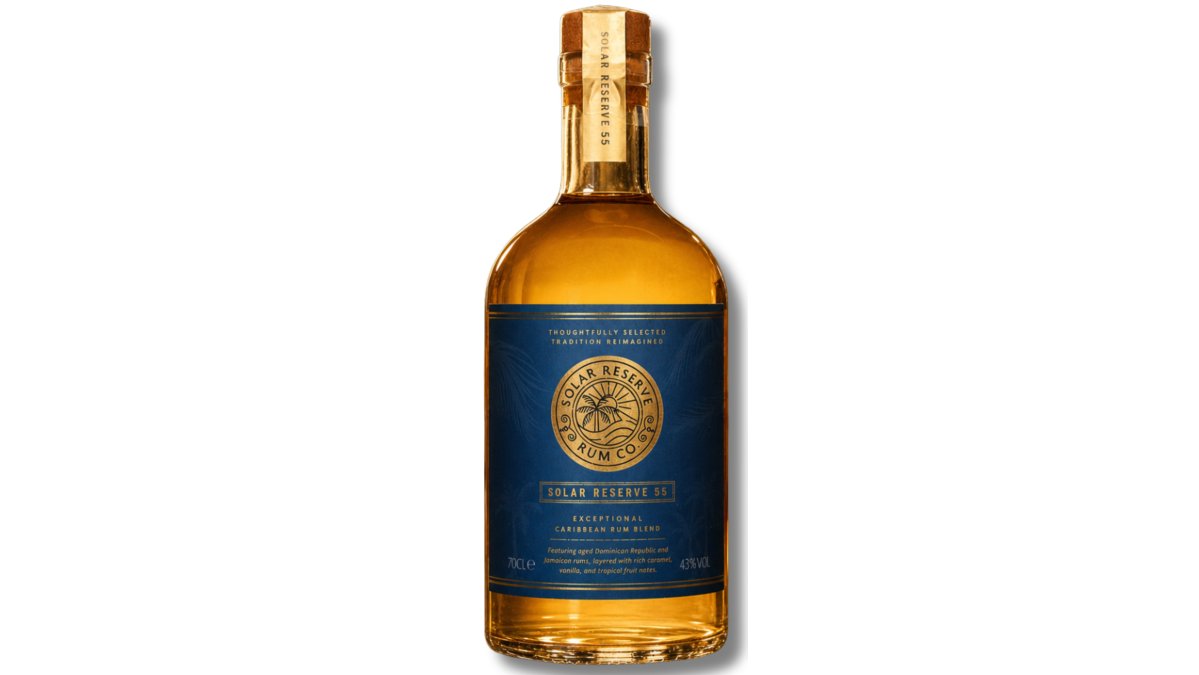
Here's a practical build sequence with rough budgets:

| Priority | Bottle Type | Example | Typical Price | Why It Matters |
|---|---|---|---|---|
| 1 | Golden rum | Solar Reserve 55 | £49.90 | Anchors Daiquiris, Old Fashioneds, highballs |
| 2 | Aged sipping rum | Solar Reserve 8 | £64.90 | Neat pours and premium gifts |
| 3 | Gin | Additive-free London Dry | Varies | Martinis, Negronis, Collins |
| 4 | Bitters | Aromatic bitters | Varies | Structure for almost every classic |
| 5 | Fortified wine | Dry vermouth | Varies | Martinis and aperitifs |
Packaging, Circularity and Carbon Footprint Transparency
Packaging and transport often outweigh production emissions for a bottled spirit, which is why circularity matters as much as distilling practice. Glass is heavy, and heavy glass costs carbon to move, the area where your own choices have the most direct effect.

The Packaging Levers You Control
Three things to check on any bottle:
- Bottle weight. Lighter glass means lower transport emissions per bottle. Premium spirits have historically used heavier glass as a signal of quality, but that weight is dead carbon, it does nothing for the liquid inside.
- Recycled content. Bottles made with recycled glass reduce raw material demand and the energy needed to melt virgin sand. Where a brand states a recycled-content figure, treat it as a genuine differentiator.
- Delivery consolidation. Ordering multiple bottles in one shipment cuts the per-bottle footprint substantially compared with three separate deliveries. If you are building a bar over several months, batch your orders.
Beyond the bottle, look at what arrives with it. Plastic-free shipping, moulded pulp inserts, paper tape, no polystyrene, is increasingly a stated commitment and easy to verify on delivery. A recyclable, uncoated gift box beats a magnetic-closure presentation case.
Refills and the Circularity Question
Refillable and returnable bottle schemes are the most meaningful circularity play in spirits, keeping the same glass in circulation rather than melting and remaking it. The model is well established in some European markets, but UK availability is still patchy and often tied to a specific retailer or distillery direct-sales channel.
How to Read a Carbon Footprint Claim
Carbon footprint transparency is where most brands still fall short. A credible claim will tell you three things:
- The boundary. Does it cover just the distillery, or the whole life cycle from field to shelf? A distillery-only figure can look impressive while ignoring glass, freight and packaging.
- The unit. Emissions are usually expressed as kilograms of carbon dioxide equivalent (kg CO₂e) per bottle or per litre of pure alcohol. Without a unit, a number means nothing.
- The reduction versus the offset. Genuine claims lead with reductions, renewable energy, lighter glass, local sourcing, and mention offsets second, if at all.
The Quiet Wins Most Drinkers Miss
The circular economy angle extends to the cask: ex-bourbon American oak barrels are reused rather than newly made, giving a second life to casks from another industry, no new timber felled. Similarly, spirit shipped in bulk and bottled closer to its final market reduces the weight moved per finished bottle.
Budget-Conscious Sustainable Sourcing and Sustainable Cocktail Recipes
Sustainable sourcing doesn't require a premium budget, just buy fewer, better bottles and use them across more drinks.
Budget-conscious approach:
- Buy one versatile rum instead of three specialist bottles
- Choose a golden blend that works neat, over ice and in cocktails
- Use fresh citrus and house-made syrup instead of pre-bottled mixers
- Buy bitters and vermouth in small formats to avoid waste
Rum Old Fashioned
- 50ml Solar Reserve 55
- 1 tsp rich demerara syrup
- 2 dashes aromatic bitters
- Stir over ice, strain over a large cube, express orange peel
Daiquiri
- 60ml Solar Reserve 55
- 25ml fresh lime juice
- 15ml cane syrup
- Shake hard with ice, double strain into a chilled coupe
The most sustainable home bar is a small one, well chosen. Four bottles used across twenty cocktails beat twenty bottles used once each.
Conclusion
Building a bar that's both sustainable and genuinely good to drink from comes down to a few decisions: buy fewer bottles, choose producers who name their sources, and pick spirits versatile enough to earn their shelf space. SolarRum makes that straightforward with rums distilled from locally grown Estate sugarcane, bottled by Scottish cask masters, and crafted without added sugar.
Frequently Asked Questions
What defines a spirit as sustainable?
A sustainable spirit is one produced with minimal environmental impact across its lifecycle. Key markers include locally grown raw materials, renewable energy in distillation, water recycling, and waste reduction. Packaging matters too: lightweight glass, recycled materials and refill options all count. Transparency is the strongest signal, so look for brands that publish specifics about their distillery practices and sourcing rather than vague green claims. Certifications such as B Corp or organic status add independent verification.
How can I make my home bar more eco-friendly?
Start with what you buy: choose sustainable spirits in lighter or recycled packaging, and favour brands that publish carbon footprint data. Switch to reusable barware instead of disposable stirrers and napkins, batch cocktails to reduce waste, and compost citrus peel. Keep a small herb garden for garnishes to cut packaging and transport. When restocking, buy larger bottles where you drink regularly, and look for refill schemes. Small changes across your bar setup add up over a year of entertaining.
Are there premium rums that prioritise sustainability?
Yes. Solar Reserve rums are made with locally grown Estate sugarcane rather than imported cane, bottled by Scottish cask masters, and crafted without added sugar. Solar Reserve is not currently B Corp certified: as a small startup, it follows B Corp's standards and practices in how it operates, and plans to pursue formal certification later once it can invest the time and cost the process takes. The range includes the Solar Reserve 55, an award-winning golden blend, and the Solar Reserve 8, an 8-year-old single-origin Dominican rum aged in ex-bourbon casks. Both are suited to sipping neat or mixing in classic cocktails such as a Daiquiri or Rum Old Fashioned, and the Discovery Duo at £101.00 lets you try both.
How do I identify sustainable alcohol brands without being greenwashed?
Look for specifics, not slogans. Genuine eco-friendly rum brands will name their distilleries, describe how cane is grown and sourced, and explain how waste and water are managed. Check for third-party certifications and published sustainability reports. If a brand claims carbon neutrality, see whether it states whether that comes from reduction or offsetting. Vague phrases like 'eco-friendly' with no detail are a warning sign. Ask directly: which distillery, which farm, which standard?
What spirits should every home bar have?
A practical core covers one or two base spirits, a liqueur, bitters and a fortified wine. For a rum-focused bar, the Solar Reserve 55 works as a versatile golden blend for mixing, while the Solar Reserve 8 suits sipping neat. Add a gin or vodka for variety, a sweet vermouth, and aromatic bitters. This small set covers Daiquiris, Rum Old Fashioneds, Martinis and Negronis, so you can host without overstocking or wasting bottles.