

Table of Contents
- What You'll Need Before You Start
- Step 1: Choose Your Rums and Plan the Tasting Order
- Step 2: Set Up the Room, Glassware and Palate Cleansers
- Step 3: Guide the Tasting (Sight, Smell, Taste)
- Rum Tasting Flight Ideas for Your Event
- Rum Tasting Scorecards and Note-Taking
- Best Food Pairings for Rum
- Common Mistakes to Avoid
- Frequently Asked Questions
Last Updated: September 29, 2026
What You'll Need Before You Start
Hosting a rum tasting is less about expensive bottles and more about controlling four variables: order, glassware, water, and pace. Get those right and even a modest lineup tastes considered. This guide from SolarRum covers the full setup, from choosing rums to scoring them.
Before guests arrive, assemble the following:
- 3 to 5 rums spanning white, aged, and dark styles
- One tulip-shaped glass per rum, per guest
- A jug of still water and a pipette or small dropper
- Plain crackers or bread, plus coffee beans
- Tasting mats, scorecards, and pens
- A notepad for the host
Step 1: Choose Your Rums and Plan the Tasting Order
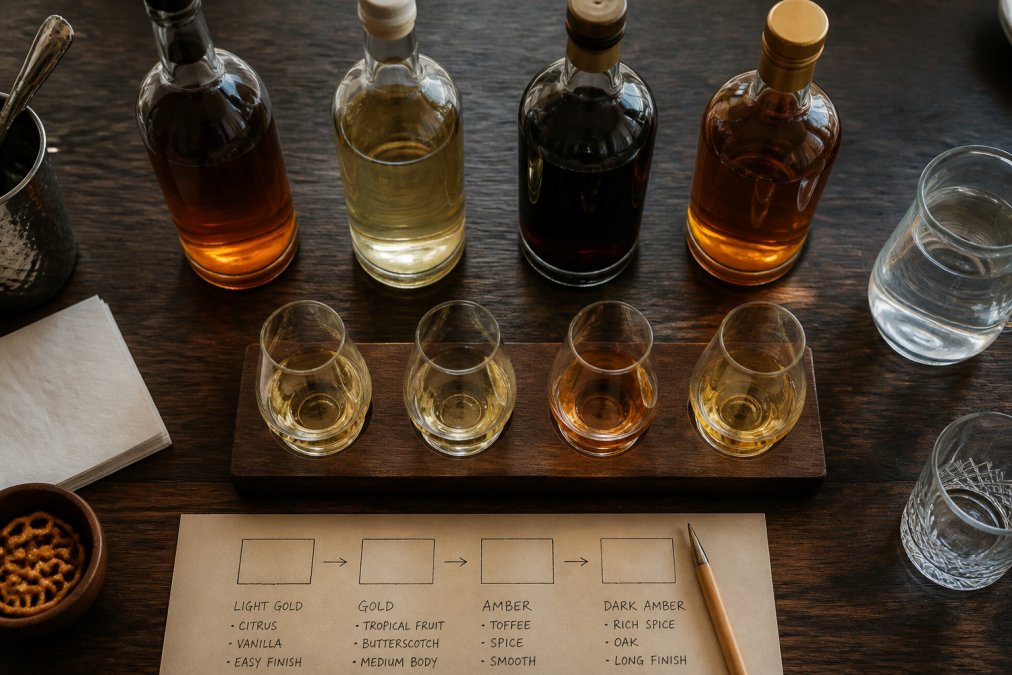
The tasting order rule is simple: light to heavy, low to high strength. Start with a white or lightly aged rum, move through aged expressions, and finish on a dark or cask strength pour. A smoky dark rum served first flattens everything after it.
Selecting the Right Rum Variety
Rum divides into white, golden, aged, and dark categories. White rum is unaged or briefly rested with a cleaner aroma; aged rum picks up vanilla, dried fruit, and spice from the cask; dark rum leans toward molasses, treacle, and deeper tannins.
Budget-Friendly vs Premium Flight Curation
You do not need a premium flight to run a good tasting. Three mid-range bottles, one white, one aged, one dark, cover the full flavour spectrum for a fraction of a single collector bottle.
| Flight Style | Rums | Best For | Time Per Rum |
|---|---|---|---|
| Budget | 3 mid-range bottles | First-time hosts, larger groups | 5-7 minutes |
| Mid-range | 4 bottles, mixed styles | Most dinner parties | 8-10 minutes |
| Premium | 3 older expressions | Small enthusiast groups | 12-15 minutes |
Step 2: Set Up the Room, Glassware and Palate Cleansers
Room setup takes twenty minutes and changes the whole evening. Clear the table of strong-smelling food, keep the room comfortable, and set each place with a tasting mat, glass, water, and scorecard. Good lighting matters too, since guests judge appearance before they nose anything.
Essential Tasting Glassware
A tulip-shaped glass is a stemmed glass with a narrow rim that concentrates aroma while letting you swirl without spilling, the single most useful piece of kit for a rum tasting.
Palate Cleansers and Water
Plain crackers, crusty bread, or coffee beans between pours reset the palate without masking what comes next. Avoid strong cheese, citrus, or heavily spiced food until after the tasting.
Step 3: Guide the Tasting (Sight, Smell, Taste)
A structured tasting runs through three stages in order: look, smell, taste. Skipping straight to drinking loses most of what makes a flight worth hosting.
Appearance, Swirl and Legs
Hold the glass against a white background and note the colour, from clear through gold to deep mahogany. Swirl gently and watch the legs run down the glass. Thicker, slower legs usually suggest more body and residual sugar, though they are not a reliable measure of quality.
Aroma, Mouthfeel and Finish
Nose the rum from just above the rim first, then closer. Note the aroma: vanilla, banana, tropical fruit, molasses, oak, or spice. Take a small sip, let it coat the mouth, then assess mouthfeel, thin, silky, or oily, and how long the finish lingers.
Rum Tasting Flight Ideas for Your Event
A themed flight gives the evening shape and a talking point. Pick one theme, build the lineup around it, and set a per-head budget before buying. Roughly £8-£15 per person for a value flight, £20-£35 mid-range, £50+ premium, based on 15ml pours across three to five rums.
Value-focused flight plans
Most guides assume a collector's budget. These three plans stay affordable without flattening the flavour range:
- The £30 starter flight: one white (e.g. a lightly rested column-still rum), one gold (a 3-5 year aged expression), one dark (a molasses-heavy blend). Total outlay is usually under £30 for three 700ml bottles if you buy own-brand or supermarket lines.
- The £60 contrast flight: one Jamaican pot still, one Barbadian column still, one Spanish-style aged rum. This teaches still type and regional style in three pours.
- The £100+ depth flight: two expressions from the same house at different ages, plus one cask strength pour. Fewer rums, more time per glass.
Premium flight curation
A premium flight trades breadth for depth: three older expressions (12 years and up), 15ml each, 12-15 minutes per rum. It suits groups of four to six who want to discuss cask influence and maturation rather than simply drink. Ask your retailer for a sample set if you do not want to commit to three full bottles.
Themed flights that work
- Island hop: one Jamaican, one Barbadian, one Dominican pour to compare terroir and style
- Age ladder: the same house at 3, 8, and 12 years to track cask influence
- Sugar-free vs sweetened: taste added-sugar rums against unadulterated ones, check the label for 'no added sugar' or 'unsweetened'
- Cask strength showdown: high-ABV pours tasted neat, then with a few drops of water
- Blind tasting: cover the labels and let guests score before the reveal
Interactive party games
Gamification turns a quiet tasting into a social event. Three formats work well:
- Blind tasting competition. Pour each rum into a numbered glass, hand out scorecards, and ask guests to rank them. Reveal the bottles at the end and award a small prize (a miniature bottle or a bar of dark chocolate) to the closest match.
- Flavour bingo. Print a grid of common rum descriptors (vanilla, banana, molasses, oak, clove, tropical fruit, caramel, pepper). Guests tick off what they detect in each pour. First to a full line wins.
- Guess the age. Pour three rums of different ages from the same house and ask guests to order them youngest to oldest. This is harder than it sounds and sparks good discussion.
Non-alcoholic alternatives
A modern tasting should include guests who are not drinking. Offer a non-alcoholic rum-style spirit (widely available in the UK) in the same tulip glass, or ginger beer, sparkling water with lime, or a virgin mojito. Pour at the same 15ml measure and include it on the scorecard so no one feels like a spectator, this covers designated drivers without making the evening feel like a compromise.
Printable flavour reference
Beginners often struggle to describe what they taste. A one-page flavour wheel grouped into families, fruity (banana, pineapple, citrus), sweet (vanilla, caramel, molasses), spicy (clove, pepper, ginger), woody (oak, cedar), and earthy (leather, tobacco), gives guests the vocabulary for meaningful notes. Print one per place setting and refer to it during the aroma and palate stages.
Rum Tasting Scorecards and Note-Taking
A scorecard keeps guests focused and gives you something to compare afterwards. Score each rum out of five across four categories, totalling twenty.
| Category | What to Score | 1-2 | 3-4 | 5 |
|---|---|---|---|---|
| Appearance | Colour and legs | Cloudy, thin | Clear, moderate | Rich, slow legs |
| Aroma | Intensity and complexity | Flat | Pleasant | Layered |
| Palate | Mouthfeel and balance | Harsh | Smooth | Rounded |
| Finish | Length and warmth | Short | Medium | Long |
A flavour vocabulary that actually helps
Most beginners freeze when asked what they taste. Give them a reference sheet grouped into families and the notes write themselves:
- Fruity: banana, pineapple, mango, citrus peel, dried apricot
- Sweet: vanilla, caramel, toffee, molasses, honey, brown sugar
- Spicy: clove, cinnamon, black pepper, ginger, nutmeg
- Woody: oak, cedar, sandalwood, sawdust
- Earthy: leather, tobacco, coffee, dark chocolate
- Floral/herbal: grass, mint, eucalyptus, orange blossom
How to write notes that survive the evening
A score alone tells you nothing in a month. Structure each note in four lines:
- Nose: two or three descriptors from the wheel
- Palate: mouthfeel (thin, silky, oily) plus one flavour
- Finish: length in seconds and whether it is warm, dry, or sweet
- One-line verdict: would you buy a bottle?
Printable scorecard template
A simple A5 card works best. Print one per guest per rum, or one card with four columns for four rums. Include:
- Rum number (not name, if running blind)
- The four scoring categories above
- A flavour wheel section to circle
- Space for the four-line note
- A final 'buy again?' tick box
Best Food Pairings for Rum
Pairing rum with food works best when flavours echo rather than compete. Aged and dark rums handle richer food; white and lightly aged rums suit lighter fare.
- Dark rum: dark chocolate, treacle tart, aged hard cheese
- Aged golden rum: salted caramel, roasted nuts, dried fruit
- White rum: ceviche, fresh fruit, light seafood
- Cask strength: strong cheese and dark chocolate, served neat
Common Mistakes to Avoid
Other pitfalls worth sidestepping:
- Overfilling glasses, which kills the aroma before anyone noses it
- Skipping water and palate cleansers between pours
- Rushing the flight instead of allowing time between rums
- Serving at room temperature in a hot room, which flattens the aroma
- Letting guests drink rather than taste, which ends the evening early
Plan for responsible consumption throughout. Offer water, food, and a non-alcoholic alternative, arrange transport home in advance, and keep pours small. A tasting is about attention, not volume.
Frequently Asked Questions
What is the proper etiquette for a rum tasting event?
Start with lighter rums and move to darker, more aged expressions. Hold the glass by the stem to avoid warming the rum with your hand. Swirl gently, nose the glass with your mouth slightly open, and take small sips. Avoid wearing strong perfume or cologne, as it interferes with everyone's ability to detect aroma profiles. Between samples, cleanse your palate with water or plain crackers.
How do you structure a rum tasting flight?
A standard flight moves from light to heavy. Begin with a white or lightly aged rum, progress through a golden or spiced expression, and finish with a dark aged rum or cask strength pour. Limit each flight to four or five rums so guests can compare without fatigue. Pour 15-20ml per sample, enough to evaluate colour, aroma and finish without overwhelming the palate.
Should you add water or ice to rum during a tasting?
Add a few drops of room-temperature water to higher-strength rums, typically above 50% ABV. Water opens up the aroma profile and softens the alcohol burn without masking flavour. Avoid ice during a tasting, as cold temperatures suppress the volatile compounds that carry aroma. Use a pipette for control, adding one drop at a time and re-nosing after each addition.
What food pairings work best with premium rum?
Dark aged rums pair well with dark chocolate above 70% cocoa, salted caramel, and strong cheeses like aged Gouda. Golden rums suit tropical fruit, grilled pineapple, and lightly spiced dishes. For a tasting event, offer small bites between flights rather than full plates. Avoid heavily seasoned or acidic foods that dull the palate and interfere with the finish of each rum.