
Table of Contents
- Sustainable Rum Production Explained: From Cane Field to Cask
- Sustainable Sugarcane Farming: Where Rum's Footprint Begins
- The Rum Production Process: Fermentation, Distillation and Ageing
- Rum Distillery Waste Management: Bagasse, Vinasse and Spent Wash
- A Measurable Framework for Sustainable Rum
- Sustainable Spirits for Home Bars: What to Look For
- Conclusion
- Frequently Asked Questions
Last Updated: October 12, 2026
Sustainable Rum Production Explained: From Cane Field to Cask
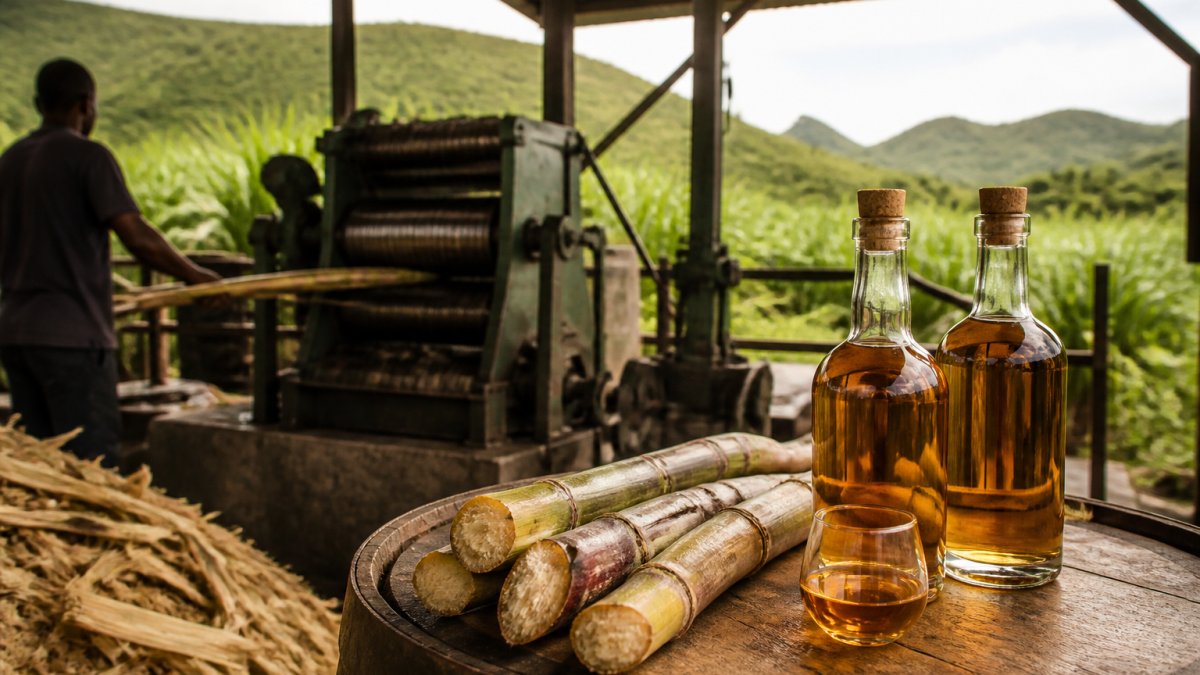
Sustainable rum production is the practice of making rum while cutting harm to soil, water, air and the people who work the land. It starts with how the sugarcane is grown, runs through fermentation, distillation, ageing and packaging, and ends with how a distillery handles its waste. This guide from SolarRum walks the full route, from field to bottle.
The pressure to get this right is real. Buyers now read labels closely and ask hard questions about green claims. Regulators are watching too. The Competition and Markets Authority guidance on environmental claims tells businesses to make green claims that are truthful, clear and backed by evidence.
So what actually counts as sustainable rum? It is a rum whose maker can show, with records, that it limits water use, energy use, waste and emissions at each stage. Not a slogan on a bottle.
Below, we break the process into its stages and show where the real gains sit.
Sustainable Sugarcane Farming: Where Rum's Footprint Begins
Most of rum's environmental impact is decided before the cane reaches the still. Farming drives fertiliser use, water draw, soil condition and diesel for harvest and haulage. Get this stage wrong and no amount of clever distilling fixes it.
A useful way to assess a cane supply chain is to look at five pressure points: soil health, irrigation, fertiliser and pesticide use, biodiversity, and labour conditions. Each one has a measurable signal a distillery can ask about.
Soil health. Cane is a heavy feeder that can degrade topsoil over repeated cycles. Growers who protect it tend to use cover crops between rows, rotate cane with legumes, retain trash blanketing (leaving cut leaf residue on the field), and reduce tillage. These practices build organic matter, improve water retention and cut erosion.
Irrigation and water draw. Cane needs water, and in drier regions irrigation can dominate the farming footprint. Drip irrigation, scheduling based on soil moisture sensors, and recycling of mill water all reduce the volume drawn per tonne of cane.
Fertiliser and pesticide use. Nitrogen and potassium are the main inputs. Over-application leaches into groundwater and emits nitrous oxide, a potent greenhouse gas. Precision application, soil testing and split dosing cut waste. On the pest side, integrated pest management, biological controls, resistant varieties, targeted spraying, reduces reliance on broad-spectrum chemicals.
Biodiversity. Monoculture cane reduces habitat. Buffer strips, field margins, riparian zones and retention of natural vegetation near watercourses support pollinators and pest predators. Some estates also manage prescribed burns carefully, or move to green harvesting (cutting without burning), which improves air quality and leaves more residue for soil.
Labour conditions. Sustainability includes people. Fair wages, safe handling of agrochemicals, protective equipment, and freedom of association are baseline expectations. Schemes such as Fairtrade and Bonsucro set standards for cane supply chains; a distillery that sources certified cane can point to independent verification rather than self-declaration.
Two sourcing choices matter most at the top level:
- Local cane over imported cane. Cane hauled long distances adds transport emissions. Estate-grown cane cut nearby keeps that down.
- Soil health over short-term yield. Cover crops, crop rotation and reduced tillage protect topsoil and cut fertiliser needs.
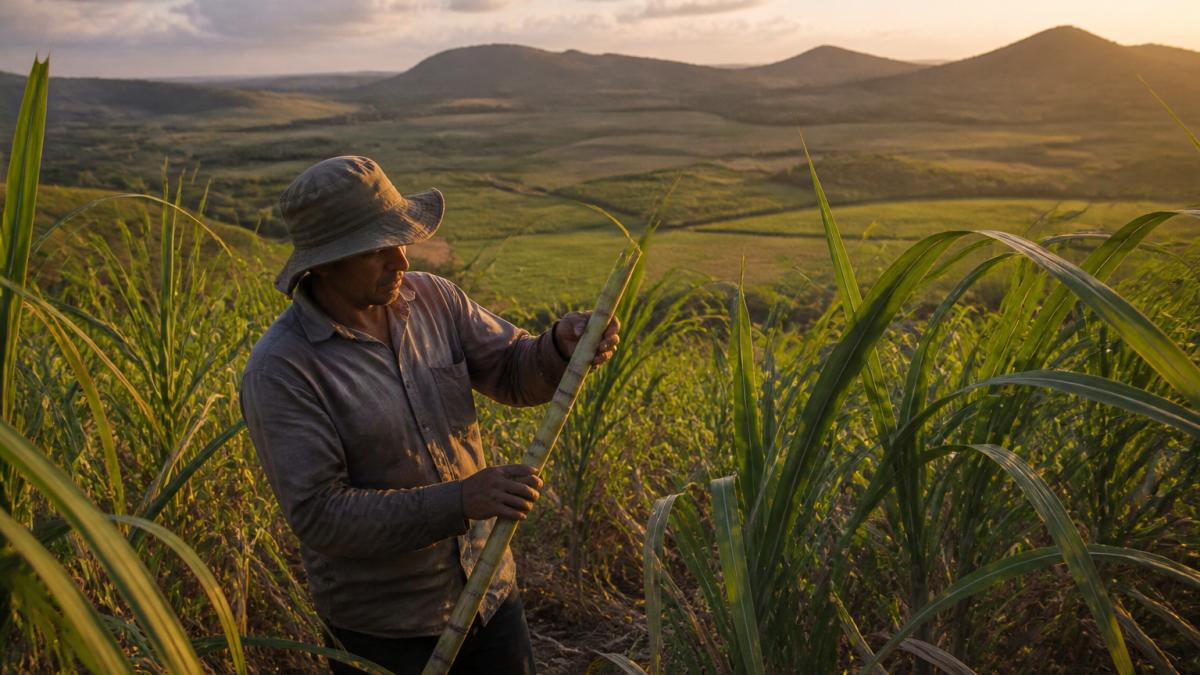
A common mistake is treating cane as a commodity and chasing the cheapest tonne. That trade-off usually shows up later as poorer juice, higher water use, degraded soil and weaker labour standards.
The Rum Production Process: Fermentation, Distillation and Ageing
Rum production runs through four stages: cane processing, fermentation, distillation and ageing. Each one has a different footprint, and each offers a different chance to cut it.
- Cane processing. Juice is pressed from the cane, or molasses is used as the base. Bagasse, the leftover fibre, is a by-product.
- Fermentation. Yeast turns sugars into alcohol and carbon dioxide. Time and temperature shape flavour.
- Distillation. Heat separates alcohol from the wash in a still. This is the most energy-hungry step.
- Ageing. Spirit rests in oak barrels, often ex-bourbon casks, picking up colour and flavour over years.
Energy is the headline. Distillation and ageing both draw power, so renewable energy and heat recovery matter. Many distilleries now burn bagasse to raise steam, turning a waste stream into fuel.
Ageing is slow and cannot be rushed. A barrel also cannot be reused forever, so cask sourcing and repair form part of the footprint.
Water Use and Natural Filtration
Water is used at almost every stage: washing cane, cooling condensers and proofing spirit. The smartest sites recirculate cooling water and clean it before release.
Natural filtration, where spirit or water passes through charcoal or similar media, can polish flavour without heavy processing. It works best when the input is already clean.
Rum Distillery Waste Management: Bagasse, Vinasse and Spent Wash
Waste handling separates serious makers from the rest. The three main streams are bagasse, vinasse and spent wash, and each has a different organic load, volume and best route.
| Waste stream | What it is | Typical characteristics | Best handling |
|---|---|---|---|
| Bagasse | Fibrous cane residue left after juice extraction | High fibre, low moisture after milling | Burn in boilers for steam and power; surplus can be sold as fuel, board or compost |
| Vinasse | Liquid left after distillation of cane juice or molasses wash | Very high organic load, acidic, high potassium | Anaerobic digestion, concentration and controlled land application as fertiliser |
| Spent wash | Residue from molasses-based wash | Extremely high chemical oxygen demand, dark colour | Anaerobic digestion with biogas capture, then treatment before any discharge |
Bagasse is the easy win. Burning it on site cuts fossil fuel use and closes a loop, and many distilleries raise most of their process steam this way. Where bagasse exceeds boiler demand, it can be pelletised, composted or sold.
Vinasse and spent wash are harder. Both are high in organic matter and, if released untreated, can strip oxygen from waterways, kill aquatic life and contaminate groundwater. Their chemical oxygen demand can be many times that of domestic sewage, so dilution is not a solution.
Treatment options fall into four groups:
- Anaerobic digestion. Microbes break down organic matter in the absence of oxygen and produce biogas, which can be burned for heat or power. This is the most common large-scale route for vinasse and spent wash.
- Concentration and incineration. Evaporating water to concentrate the stream, then burning it, recovers potassium salts and destroys organic load, but is energy-intensive.
- Controlled land application. Treated or raw vinasse can be spread on cane fields as a potassium-rich fertiliser, but only at rates matched to soil and crop needs, and never near watercourses.
- Aerobic polishing. After digestion, remaining organic matter can be reduced in aerated lagoons or activated sludge systems before any discharge.
A common mistake is calling a waste stream "zero waste" because it leaves the site. If it pollutes somewhere else, the problem has just moved. The honest test is whether the receiving environment can absorb it without harm, and whether the distillery can show monitoring data to prove it.
A Measurable Framework for Sustainable Rum
You cannot manage what you do not measure. A working framework for sustainable rum rests on five tracked numbers, reviewed each year:
- Water intensity - litres used per litre of pure alcohol.
- Energy intensity - kilowatt-hours per litre of pure alcohol.
- Renewable share - the percentage of energy from renewable sources.
- Waste recovery - the share of by-products reused rather than dumped.
- Emissions - greenhouse gases per bottle, from field to shelf.
Track these and you have a baseline. Set targets against it. Then report progress honestly, including the misses.
Life-cycle assessment ties it together. It counts impact from cane growing through to packaging, transport and the bottle on the shelf. Glass is heavy, so packaging and transport can outweigh distilling in the total.
Verification matters here. An independent audit turns a claim into proof. Without one, a green label is just a promise.
Sustainable Spirits for Home Bars: What to Look For
Choosing sustainable spirits for home bars comes down to four checks: sourcing, additives, packaging and proof. A bottle that scores well on all four is one you can pour with confidence.
- Sourcing. Look for estate-grown cane and named distilleries.
- Additives. Rums with no added sugar let the spirit speak for itself.
- Packaging. Lighter glass and recycled materials cut transport impact.
- Proof. A maker that publishes its numbers is usually a maker worth backing.
This is where we put our own name to it. SolarRum bottles Caribbean rum from distilleries that use locally grown estate sugarcane rather than importing it. Our spirits are crafted without added sugar and aged in American bourbon oak casks, then bottled by Scottish cask masters.

The Solar Reserve Discovery Duo brings both expressions together: the SR55, a golden blend of Jamaican pot still character and Dominican Republic smoothness, and the SR8, an 8-year-old dark rum with notes of vanilla, oak and warm spice. It suits a Daiquiri, a Rum Old Fashioned, or a glass sipped neat.
One honest note: we are a small producer, so we cannot match the shelf space of the biggest names. What we can do is tell you exactly where our cane comes from.
Conclusion
The hard part of sustainable rum is not the idea. It is the discipline of measuring water, energy, waste and emissions year after year, and reporting what you find. Most makers talk about it. Fewer can show the numbers.
We built SolarRum around that idea. Our rum uses locally grown estate sugarcane, carries no added sugar, and is aged in American bourbon oak casks before Scottish cask masters bottle it. The result is a spirit that tastes as good as its story.
Get started with SolarRum and pour a bottle you can trace from cane field to cask.
Frequently Asked Questions
What does sustainable rum production mean?
It covers how a rum is made from field to bottle: how the sugarcane is farmed, how much water and energy the distillery uses, what happens to by-products such as bagasse and vinasse, and how the spirit is packaged and shipped. A genuinely sustainable rum reduces environmental impact at each of those stages rather than offsetting one problem with another. Because there is no single mandatory certification, the clearest signal is a producer that can explain its sourcing, its distillery practices and its waste handling in specific terms.
How does sugarcane farming affect the environment?
Sugarcane is a thirsty, nutrient-hungry crop. Growing it can strain local water sources, and heavy fertiliser use risks runoff into rivers and coastal waters. Where fields are burned before harvest, air quality suffers too. Farming practices matter more than the crop itself: estate-grown cane, crop rotation, reduced fertiliser and careful irrigation all lower the impact. Cane grown close to the distillery also cuts the transport emissions that imported feedstock adds, which is why local sourcing is such a common claim among sustainable rum producers.
What happens to the waste from rum production?
Three by-products dominate. Bagasse, the crushed cane fibre left after juice extraction, is often burned to generate heat for the stills, closing an energy loop. Vinasse, also called spent wash, is the dark liquid left after distillation; it is rich in organic matter and is typically treated before disposal, spread on fields as fertiliser or concentrated. Wastewater from cleaning and cooling needs treatment as well. Distilleries that reuse bagasse for energy and return treated vinasse to the land come closest to zero-waste production.
How can you tell whether a rum is sustainably produced?
Ask three questions. First, where does the sugarcane come from, and is it grown locally or imported? Second, what happens to the bagasse and the spent wash? Third, is the rum bottled without additives, since added sugar and colouring mean extra processing and shipping. Vague claims about being green are a warning sign; specific answers about feedstock, energy and waste are not. A single-origin rum such as the Solar Reserve Discovery Duo, which pairs a Caribbean blend with an 8 Year Old Dominican Republic expression, makes those sourcing questions easier to trace than a mass-market blend.