
Quick Summary
Rum tasting notes help bar buyers when they are read as a tool for purchasing decisions. Use them to predict how a rum will behave in your planned serves, against its price, and across repeat orders, then confirm with a blind tasting. Notes describe aroma and palate, not quality or consistency.
- Treat tasting notes as a shortlist filter, not a verdict on quality.
- A single bottle's notes are one sample, so taste before committing to a case.
- Match each rum's notes to a specific serve such as neat, over ice, stirred or shaken.
- Use a blind scoring sheet and record pour cost and menu price beside sensory scores.
- Calibrate the tasting panel with dummy samples before scoring anything that matters.
Table of Contents
- What Premium Rum Tasting Notes Actually Tell a Bar Buyer
- Rum Styles and What Each Category Tastes Like
- How to Taste Rum Systematically
- Rum Tasting Notes Examples by Bar Use Case
- Rum for Cocktails vs Sipping: Choosing the Right Expression
- A Rum Tasting Sheet Template for Blind Scoring
- Booking a Tasting Session Before You Stock Your Back Bar
- Frequently Asked Questions
Rum tasting notes can help a bar buyer, but only when they are read as a tool for decisions rather than as a set of flavour poetry. The useful question is not whether a rum tastes of toffee and dried fruit, but whether those descriptors predict how the spirit will behave on your menu, in your glassware and in front of your guests. This guide explains where tasting notes earn their place in purchasing and where they mislead.
Tasting notes are written by producers and reviewers to describe aroma, palate and finish. They are a starting point. A bar buyer needs to translate them into three practical questions: will this rum suit the serve we plan, will it justify its price on the menu, and will the flavour hold up across repeat orders.
What Premium Rum Tasting Notes Actually Tell a Bar Buyer
Tasting notes describe sensory impressions, not quality grades. A note such as vanilla or caramel tells you the rum probably has oak influence or sweetness, but it does not tell you whether the batch is consistent or whether it will be available next quarter. Treat notes as a shortlist filter.
Watch out: a single bottle's notes are one sample. Two bottles from the same brand can vary, so taste before you commit to a case.
Rum Styles and What Each Category Tastes Like
Rum is usually grouped into white, gold, dark, aged and spiced styles. White rums tend to be lighter and cleaner, which suits mixing. Gold and aged rums usually show more oak, vanilla and caramel character, which suits sipping or stirred drinks. Dark rums often carry treacle and dried fruit notes. Spiced rums add flavourings, so their notes describe the additions as much as the base spirit.
Use the category first, then the notes. A rum labelled aged with notes of oak and vanilla will behave differently in a Daiquiri than a light white rum with bright citrus.
How to Taste Rum Systematically
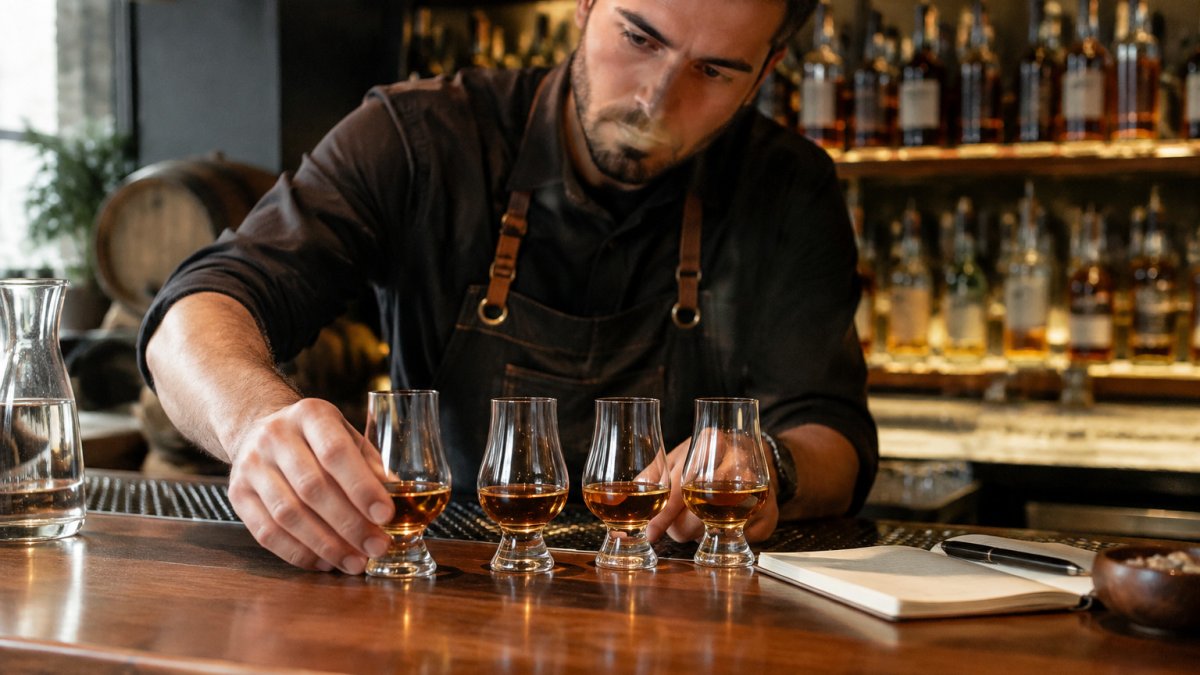
A consistent method makes tasting notes comparable across bottles. Pour the same measure, at the same temperature, into the same glass for each rum. Nose the spirit first, then taste in small sips, noting sweetness, spice, texture and length of finish. Record what you observe before reading the producer's description, so your impression is not shaped by the label.
Repeat the tasting on a second day if you can. Palates tire, and a rum that impresses in the first hour may feel flat by the end of a session.
Rum Tasting Notes Examples by Bar Use Case
A tasting note is only useful to a bar if it predicts how the rum will behave in the serve you plan to sell. The same descriptor can be an asset in one drink and a liability in another, so it is worth reading each note against the conditions it will be tasted under.
Neat service exposes everything. Alcohol strength, texture and the length of the finish are all unmasked, so a note of oak or spice can feel harsh if the rum is young or poorly balanced. For neat menus, look for a finish that lengthens rather than burns, and for texture that feels round rather than thin. Ask whether the notes are still present after a few minutes in the glass, because some rums open considerably as they meet air.
Over ice, dilution does much of the work. As the ice melts, sweetness can rise in perceived intensity while the more volatile aromatics fade. A rum whose best notes sit in the nose may lose its character within a few minutes, while one with a fuller mid-palate often holds up. When you taste over ice, pour onto fresh ice and taste again at intervals to see how the profile moves.
Stirred drinks, such as a Old Fashioned or a Rum Manhattan, depend on body and on oak that survives dilution without going thin. Notes of vanilla, caramel and dried fruit tend to carry well here, provided the base spirit has enough weight to stand up to vermouth or bitters. Test the rum at the exact dilution you will use, because the figure on a recipe card often differs from what the bartender pours.
Shaken and citrus-forward serves change the question again. Lime and sugar strip away subtle top notes and reward rums with a clear, bright base. Heavily oaked or very sweet expressions can be over-powered by acidity or can make the drink cloying. For these, pair the tasting with a trial build of your house recipe, not just the rum on its own.
A practical method is to write one line per rum linking its notes to a specific serve on your menu, then test it in that serve with the measure and ice your bar actually uses. If the note only shows up neat and disappears in the drink you intend to sell, the rum may suit a sipping list better than the cocktail menu.
Rum for Cocktails vs Sipping: Choosing the Right Expression
Cocktail rums and sipping rums overlap, but they are not interchangeable. Lighter, cleaner expressions usually mix well and cost less per serve. Richer, older expressions reward neat or on-the-rocks service, where their oak and sweetness can be appreciated without competition from citrus or sugar.
SolarRum's range shows the distinction clearly. The Solar Reserve 55 is a Caribbean blend with a tasting profile of natural caramel, toffee and warm vanilla, and it works neat, over ice and in mixed drinks. The Solar Reserve 8 is a single-origin, eight-year-old Dominican rum with notes of sweet mango, toffee and oak, suited to neat sipping. Matching each to its strengths is more useful than asking which is better.
The two categories overlap, but the article's SolarRum examples show how the same brand's rums fit different serves.
| Expression | Tasting profile | Best serve |
|---|---|---|
| Solar Reserve 55 | Natural caramel, toffee, warm vanilla | Neat, over ice, mixed drinks |
| Solar Reserve 8 | Sweet mango, toffee, oak | Neat sipping |
A Rum Tasting Sheet Template for Blind Scoring
Blind scoring is the most reliable way to stop brand familiarity from deciding a purchase. For a comparison method to apply alongside this template, see how to compare small batch reserve rums. The method is simple to describe and easy to get wrong, so it helps to set it up deliberately.
Start by assigning each candidate a neutral sample code and having someone who is not part of the scoring pour the samples. Use identical glassware, the same measure, and the same serving temperature, and taste in the same order on every panel. Rotate the order between sessions so that palate fatigue does not systematically favour the samples tasted first or last.
Score each criterion separately rather than giving a single overall impression. A practical sheet asks for the following, each on a five-point scale:
Rum tasting sheet Sample code: ____ Nose (1-5): ____ Notes detected: ____________ Palate (1-5): ____ Sweetness (1-5): ____ Body (1-5): ____ Finish length (1-5): ____ Balance (1-5): ____ Serve suitability (neat / over ice / stirred / shaken): ____________ Estimated pour cost per serve (GBP): ____ Proposed menu price (GBP): ____ Decision: List / Test again / Decline Reason: ____________
The commercial rows are what separate a bar buyer's sheet from a consumer tasting. A rum that scores highly on palate but needs a large measure to show its character may carry a pour cost that makes it hard to justify at the price point your guests expect. Recording pour cost and menu price beside the sensory scores forces that trade-off into the same decision.
Calibrate the panel before the real session. Run two or three dummy samples, ideally a well-known rum and a plain white rum, and compare how each person scores them. Large disagreements on the same sample usually point to unclear descriptors rather than differing palates, so agree on what a 'three' for body or finish means before you score anything that matters. Once the panel is calibrated, averages become meaningful and outliers become useful signals.
Reveal the labels only after totals are recorded. The most informative result is often the gap between the blind favourite and the rum the team expected to win, because that gap shows where brand expectation was shaping the team's preferences.
Booking a Tasting Session Before You Stock Your Back Bar
Before you commit to a range, book a structured tasting with your bar team and, where possible, with the supplier. Run the blind sheet, agree on the serves each rum suits, and note any staff questions the notes raise. Staff who can explain a rum's character to a guest sell more of it, so the session doubles as training.
To explore SolarRum's range before a session, see the Solar Reserve Discovery Duo, which pairs the 55 and the 8 side by side. For a closer look at how the 8 differs from the 55, this buyer's guide to its flavour covers the tasting profile in more detail.
Tasting notes are a sensible first filter for premium rum, but they are not a verdict. Used alongside a blind sheet, a use-case match and a supplier conversation, they can shorten a long shortlist and help you buy with confidence.
Frequently Asked Questions
How should bar buyers taste premium rum?
Start with a clean palate and a small pour at room temperature. Nose the rum first, then take a small sip and hold it across the palate before swallowing. Note the aroma, the initial taste, the mid-palate, and the finish separately. Taste the same rums side by side, and rinse your palate with water between samples. Repeat the tasting on a second day if you are unsure, because palate fatigue distorts scores quickly.
What should rum tasting notes include?
Useful tasting notes cover aroma, palate, texture, balance, sweetness, and finish, rather than a list of loosely related fruits. Record descriptors such as vanilla, caramel, citrus, oak, or spice, and note whether each one is dominant or subtle. Add a short line on how the rum performs neat and in a cocktail. Notes written in this consistent structure let staff and buyers compare bottles fairly across a range.
How can you tell whether a rum is sweetened?
Sweetness added after distillation is often hard to detect by nose alone, so use the palate and the finish. A rum that tastes rounder and sweeter than its listed age or style suggests may contain added sugar. Compare the same rum neat against a known unsweetened reference. Check the label and producer information, and treat marketing claims about sugar content as statements to verify rather than assumptions.
How do you choose a rum for cocktails versus sipping?
Choose a rum for cocktails if it stays clear and balanced when diluted with citrus, sugar, or ice, and if its character is still present in the mix. Choose a rum for sipping if its complexity, finish, and oak or aged notes are the main attraction when served neat. Many bottles work in both settings, so test each one in the cocktail you plan to serve before adding it to your menu.
