
Last Updated: November 1, 2026
Quick Summary
Compare reserve rums by verifying what the label can prove: the age statement shows the youngest spirit, and cask type, still type and additive status tell you more than the words small batch or reserve. Taste two side by side in identical glasses with 25ml pours, scoring aroma, palate, finish, balance and perceived sweetness out of 10.
- Small batch and reserve have no legal definition, so treat both as hints rather than proof.
- An age statement means the youngest spirit in the blend, not the average age.
- Use identical tulip or copita glasses with 25ml pours at room temperature for a fair comparison.
- Score aroma, palate, finish, balance and perceived sweetness out of 10, writing one sentence of justification each.
- The Discovery Duo puts both Solar Reserve bottles in one box for side-by-side tasting.
Table of Contents
- What Small Batch and Reserve Actually Mean on a Rum Label
- A Side-by-Side Tasting Method for Reserve Rums
- How to Read Rum Tasting Notes Before You Buy
- Rum Without Added Sugar: How to Tell What's in the Bottle
- Sustainable Rum Production: Questions Worth Asking
- Comparing Solar Reserve Rums: Which Bottle Suits Which Drinker
- Value Beyond Bottle Price: What You're Actually Paying For
- Building Your Own Reserve Rum Tasting Flight
- Frequently Asked Questions
What Small Batch and Reserve Actually Mean on a Rum Label
"Small batch" and "reserve" are marketing terms, not regulated categories. For a straight-talking glossary of terms like pot stills, tropical ageing and age statements, see The Solar Rum Guide.
That matters because the category is growing. Fortune Business Insights' craft rum market forecast projects the global craft rum market rising from USD 1.55 billion in 2026 to USD 2.37 billion by 2034.
The words on the front label tell you less than the small print on the back.
Why 'Small Batch' Has No Legal Definition
Small batch is a production claim with no legal definition. A distillery can use it for a run of a few hundred barrels or a few thousand, and no regulator will object.
What you can check instead:
- Age statement: a number of years means the youngest spirit in the bottle, not the average
- Distillery name: a named producer is easier to verify than a trading company
- Cask type: ex-bourbon, ex-sherry or virgin oak changes the flavour profile substantially
Treat "small batch" as a hint, never as proof. Rum.nl's 2026 rum trends roundup names premiumisation and flavour innovation as the forces driving this language onto more labels.
Reading an Age Statement Without Being Misled
An age statement is the most useful number on a rum bottle, and the most misread. A bottle marked 8 years old means the youngest rum in the blend is 8 years old; older spirit cannot rescue a younger component.
Two more things to check: where the rum was aged (tropical ageing in the Caribbean matures spirit faster than cool-climate ageing in Europe, so two 8-year-olds can taste very different), and whether the age refers to the spirit or the blend's average.
A Side-by-Side Tasting Method for Reserve Rums
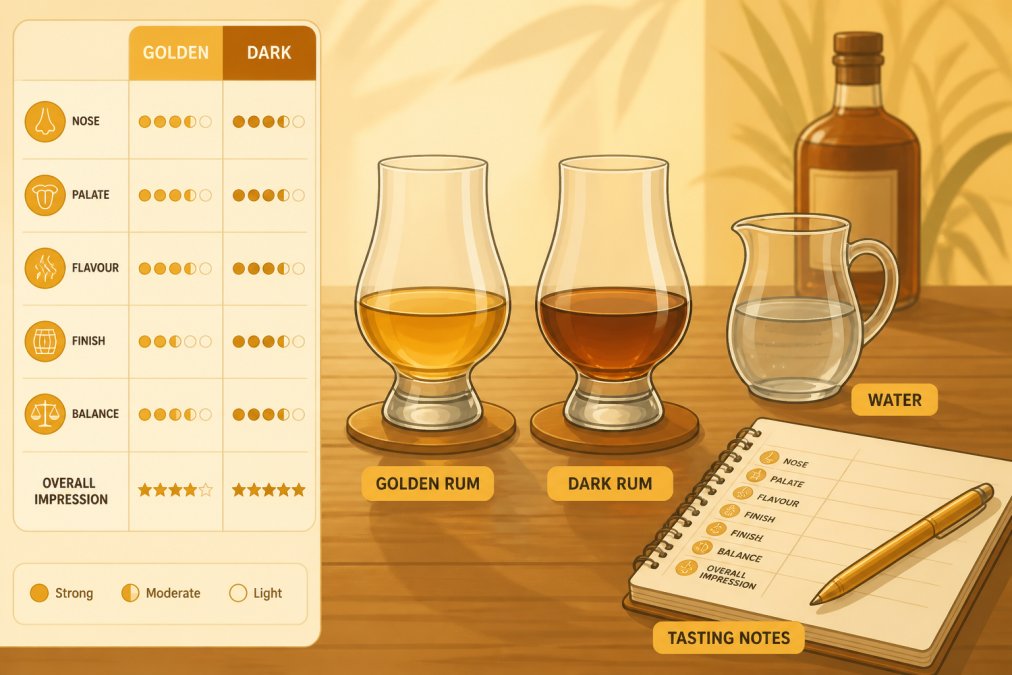
Tasting two reserve rums side by side tells you more in twenty minutes than reading twenty reviews. The method is simple: same glass, same pour size, same conditions. What most guides skip is how to score what you taste so the comparison is repeatable.
Control the Variables First
Before you pour, remove the things that skew a comparison:
- Glassware: use identical tulip or copita glasses. A wide tumbler flattens aroma; a narrow glass concentrates it.
- Pour size: 25ml each, measured. A heavier pour changes the surface area and the aroma.
- Temperature: let both bottles sit at room temperature for at least an hour. Fridge-cold rum hides esters and exaggerates sugar.
The Six-Step Run
- Pour 25ml of each into identical glasses, side by side.
- Nose both before tasting and write down the first three things you smell. A gentle tilt is enough.
- Taste neat, a small sip, and let it sit on the palate for five seconds before swallowing.
- Add three drops of water to each and taste again. Note whether the rum improves or falls apart.
- Score each rum on the rubric below, out of 10 per category.
- Revisit after ten minutes and note what has opened up or faded.
A Scoring Rubric That Actually Compares
Score each category out of 10 and write one sentence of justification. The sentence matters more than the number, because it forces you to say why.
| Category | What you are judging | What a high score looks like |
|---|---|---|
| Aroma | Intensity, complexity, cleanliness | Distinct layers (fruit, oak, spice) that you can name |
| Palate | Body, texture, flavour concentration | Coating but not syrupy; flavours that match the nose |
| Finish | Length, evolution, dryness | Lingers 30 seconds or more and changes character |
| Balance | Integration of alcohol, sweetness, oak | No single element shouts over the others |
| Perceived sweetness | How sugary it feels, not how sugary it is | Dry or off-dry; sweetness that fades rather than sticks |
Balance is the category most tasters under-weight. A rum can have a spectacular nose and a long finish and still lose a side-by-side because the alcohol pricks or the oak turns bitter.
Perceived sweetness is not the same as sugar content.
Reading the Result
The scoring matters less than the comparison. A rum that scores 7 alone can feel thin next to one that scores 8. Look for the category where the gap is widest, that is the real difference between the bottles.
How to Read Rum Tasting Notes Before You Buy
Tasting notes are a map, not a guarantee. They tell you what the producer or a judge detected, and they help you match a bottle to your palate.
Aroma covers what you smell first: vanilla, caramel, tropical fruit, oak, spice. Palate is the body and texture in the mouth. Finish is how long the flavour lingers and whether it turns dry, sweet or spicy.
Watch for vague language. A reviewer's subjective take is still useful: The Lone Caner's review of Bundaberg Reserve Rum found the finish short and sweet, which is exactly the kind of specific note worth weighing against your own preferences.
Rum Without Added Sugar: How to Tell What's in the Bottle
Sugar is legal in rum in most markets and rarely declared on the label. A small amount can round off rough edges; a large amount can make a young spirit taste older than it is.
Three practical checks:
- The texture test: heavily sweetened rum feels syrupy and coats the glass
- The finish test: added sugar tends to leave a sticky, lingering sweetness rather than a dry or spicy tail
- The label test: "no added sugar" or "additive free" is a voluntary claim, so look for producers who state it clearly
Sustainable Rum Production: Questions Worth Asking
Sustainability claims are hard to verify from a bottle, so ask producers directly:
- Where is the sugarcane grown, and is it estate-grown or imported?
- How is the distillery's waste handled, particularly the liquid left after distillation?
- Are casks reused or shipped in new?
Rum.nl's trends report lists sustainability among the trends shaping rum in 2026, but the report offers no figures. That is your cue to ask rather than assume. Our 2026 guide to sustainable rum production gives you the full set of questions.
Comparing Solar Reserve Rums: Which Bottle Suits Which Drinker
Solar Reserve is bottled by Scottish cask masters. Both expressions are additive free and aged in American bourbon oak casks.
| Bottle | ABV | Price | Style | Best for |
|---|---|---|---|---|
| Solar Reserve 55 | 43% | £47.90 | Golden blend, Jamaican pot still + Dominican column | Cocktails, versatile sipping |
| Solar Reserve 8 | 46% | £59.90 | Single origin, 8-year-old dark rum | Neat sipping, slow evenings |
| Discovery Duo | 43% / 46% | £98.10 | Both bottles, 12% off, free delivery | Side-by-side tasting, gifting |
Solar Reserve 55: The Versatile Blend
Solar Reserve 55 combines 3, 5 and 8-year-old Dominican column still rums with a 3-year-old Jamaican pot still rum. Expect natural caramel, toffee and vanilla, tropical fruit, a grassy Jamaican funk and mellow oak. It holds a 95-point Gold Medal from the 2025 London Spirits Competition and Gold at The Spirits Business Rum & Cachaça Masters 2026. Best for: Daiquiris, Rum Old Fashioneds and neat sipping. Skip if: you want a heavy, cask-forward dark rum. Its blend of natural caramel and tropical fruit makes it useful to distinguish genuine flavor from added sweetness, much as tasters tell if whiskey uses real fruit.
Solar Reserve 8: The Sipping Rum
Solar Reserve 8 is a single-origin 8-year-old from the Dominican Republic, made from fresh cane juice and aged at origin in once-used ex-bourbon barrels. The nose brings mango, toffee, coconut and hazelnut; the palate adds fudge, warm Christmas spice and lingering oak. At 46% ABV it rewards a few drops of water. Best for: neat sipping and gifting. Skip if: you mostly mix with cola.
Solar Reserve Discovery Duo: The Side-by-Side Option
The Discovery Duo puts both bottles in one box at £98.10, with free delivery and 12% already applied. It is the cheapest way to run the tasting method above with matched expressions. You can buy the side-by-side set on the Solar Reserve Discovery Duo product page. Best for: anyone deciding between the two, or buying a gift.

Value Beyond Bottle Price: What You're Actually Paying For
Price per bottle is the wrong metric on its own. Value in reserve rums comes from four things: age, cask quality, production method and what has not been added. Turn each into a number or a yes/no you can compare across bottles.
Four Questions That Convert Price Into Value
1. What is the price per 25ml serve? Divide the bottle price by the number of 25ml pours (a 700ml bottle gives 28).
2. What is the price per percentage point of ABV? A higher-strength rum can be diluted to drinking strength, so you get more serves from the same bottle.
**3.
4. What is disclosed? A producer who states cask type, still type and additive status is giving you the information to judge value.
A Worked Comparison
Take two hypothetical bottles at the same £50 price. Bottle A is 40% ABV, no age statement, no cask disclosure. Bottle B is 46% ABV, 8-year-old, ex-bourbon cask, additive free. On sticker price they are identical. On price per ABV point, B is cheaper. On disclosure, B gives you three verifiable facts and A gives you none.
Where Solar Reserve Sits
A £47.90 bottle of Solar Reserve 55 buys a blend containing 8-year-old spirit and a Jamaican pot still component at 43% ABV. A £59.90 bottle of Solar Reserve 8 buys single-origin ageing at 46% ABV. Neither is cheap, but both disclose the details that let you run the four questions above.
Ask three questions before you buy: How old is the youngest spirit? What cask was it aged in? Is anything added? If a label cannot answer those, the price is guesswork.
Building Your Own Reserve Rum Tasting Flight
A good flight runs light to heavy, with three to five pours and a glass of water between each. For a complete guide to planning and running your own tasting at home, see How to Host a Rum Tasting. Keep the pour small, keep notes, and resist the urge to score everything.
A workable structure:
- Pour 1: the lighter, more versatile rum, to calibrate your palate
- Pour 2: the aged sipping rum, neat
- Pour 3: the same aged rum with a few drops of water
Frequently Asked Questions
What does small-batch rum mean?
There is no legal definition of small-batch rum in the UK, so the phrase is a marketing term rather than a guarantee. It usually signals a distillery making rum in smaller runs with more attention per cask, but nothing on the label enforces it. When comparing small batch reserve rums, treat the term as a prompt to check the production details instead: who distilled it, where it was aged, and whether the bottler is transparent about the blend. A bottle that names its distillery and ageing process tells you more than any 'small batch' badge.
What is the difference between reserve rum and aged rum?
Aged rum means the spirit spent time in cask, and any age statement should reflect that. Reserve rum has no fixed legal meaning either, so it is usually a house signal for a premium or limited expression. The practical difference shows up in the glass: reserve rums often carry more cask influence, deeper colour and more layered rum tasting notes. When you compare them, check the age statement, the cask type and whether the bottler discloses additives. Solar Reserve 8, for example, states eight years in ex-bourbon American oak at 46% ABV.
How can you tell whether a rum has added sugar?
UK labels rarely list sugar, so you have to read the clues. Very sweet, syrupy texture on a rum with no age statement is a warning sign, as is a thin aroma that promises more than the palate delivers. Bottles that describe themselves as rum without added sugar, or as additive free, are making a claim you can hold them to. Compare two rums neat at the same strength: the one that tastes rounded but not cloying, with dry oak and spice on the finish, is usually the cleaner spirit.
What makes rum production more sustainable?
The biggest factors sit upstream of the bottle: where the sugarcane comes from, how the distillery handles waste and water, and how far the spirit travels before it reaches you. Sustainable rum production usually means locally grown cane rather than imported raw material, and distilleries that can explain their practices rather than just claiming them. Ask what you can verify: named estates, disclosed distilleries, and a bottler willing to talk about sourcing. Treat any sustainability claim without a named source as marketing until proven otherwise.
Comparing small batch reserve rums well comes down to reading past the label and tasting with intent. SolarRum makes that easier: our rums are additive free, aged in American bourbon oak casks, and bottled by Scottish cask masters, with the Solar Reserve 55 and Solar Reserve 8 both available for side-by-side tasting in the Discovery Duo. Get started with SolarRum and taste the difference for yourself.
