
Last Updated: November 2, 2026
Quick Summary
To balance flavours in a cocktail at home, adjust the four levers of sweet, sour, strong and bitter, starting from the 2:1:1 Daiquiri ratio of spirit, citrus and syrup. Change one lever at a time in small measured increments, tasting between each, and record what you did.
- A shaken drink typically gains roughly a fifth to a quarter of its volume in water from ice.
- Fix an overly sweet cocktail with acid first, then dilution, then a pinch of salt.
- Use increments of about 5 ml for citrus, syrup or water, two dashes of bitters, and one small pinch of salt.
- If you add more than three increments of the same lever, the base ratio is wrong and you should start again.
- A 46% ABV spirit needs more dilution than a 40% ABV bottle to reach the same perceived softness.
Table of Contents
- How to Make a Balanced Cocktail: The Four Levers You Actually Adjust
- The Classic Daiquiri Ratio, and Why It Works as Your Baseline
- Cocktail Dilution and Balance: What Ice Does to a Drink
- How to Fix an Overly Sweet Cocktail Without Starting Again
- A Repeatable Home Tasting Workflow: Measure, Taste, Adjust, Record
- Ingredient Troubleshooting: Matching the Fix to the Flaw
- Building Your Home Balancing Kit with Solar Reserve Rum
- Frequently Asked Questions
How to Make a Balanced Cocktail: The Four Levers You Actually Adjust
Learning how to balance flavours in cocktails at home comes down to four levers: sweet, sour, strong and bitter. Nearly every fix you'll make pulls one of them. Get those four in proportion and a drink tastes clean. Miss one and the whole glass feels off, no matter how good the spirit.
A drink's sweetness should come from your syrup, not hide inside the bottle.
Flavour balance is the practice of adjusting sweet, sour, strong and bitter until no single element dominates.
Here's what most guides get wrong: they tell you to "season to taste" and stop there. That's not a method.
Sweet, Sour, Strong and Bitter
Each lever does a specific job:
- Sweet (syrup, liqueur) rounds sharp edges and adds body
- Sour (lemon, lime) lifts the drink and keeps it fresh
- Strong (spirit) gives structure and length
Salt sits quietly alongside these. A tiny pinch makes sweet and sour read more clearly.
Why Spirit Choice Sets the Ceiling
You can't out-mix a poor base spirit. A rum with heavy added sugar starts sweet before you've measured a thing, so your syrup has to fight it. A dry, additive-free spirit gives you a clean canvas.
That's the case for aged versus white rum in cocktails: the choice changes how much correction the drink needs.
The Classic Daiquiri Ratio, and Why It Works as Your Baseline
The classic Daiquiri ratio is two parts rum, one part lime juice and one part syrup. It works because it puts spirit at double the weight of each modifier, so the drink stays strong while staying fresh.
Treat it as your template. Swap the spirit and you have a rum sour. Swap the citrus and you have a new drink.
For a deeper walkthrough, our guide on how to craft a perfect Daiquiri covers the method step by step. If you're unsure which bottle to build it with, see our pick of the best rum for a classic Daiquiri.
| Lever | Job | Too much | Too little |
|---|---|---|---|
| Sweet | Rounds and adds body | Cloying, syrupy | Thin, harsh |
| Sour | Lifts and freshens | Sharp, mouth-puckering | Flat, dull |
| Strong | Structure and length | Hot, burning | Watery |
| Bitter | Depth and finish | Astringent | Bland |
Cocktail Dilution and Balance: What Ice Does to a Drink
Cocktail dilution is the water that enters a drink from ice, and it is an ingredient, not a side effect. A shaken drink typically gains roughly a fifth to a quarter of its volume in water.
Skip it and the drink tastes hot and closed. Overdo it and you've made a sad, watery version of something that was nearly right.
Shake, Stir or Build Over Ice
- Shake citrus, syrup and dairy drinks: fast chill, fast dilution, a little air
- Stir spirit-forward drinks: slow, controlled dilution, silky texture
- Build long drinks in the glass over fresh ice
Watch out: wet, melting ice from a warm bucket dilutes far faster than fresh ice. Fill your glass properly and your ratios hold.
How to Fix an Overly Sweet Cocktail Without Starting Again
To fix an overly sweet cocktail, add acid first, then dilution, then a pinch of salt. Add small amounts and taste between each. Most sweet drinks need a quarter-teaspoon of citrus, not a rebuild.
Work in this order:
- Add acid. A bar spoon of lime or lemon juice.
- Add dilution. A splash of water or a few more seconds of stirring.
- Add salt. One small pinch, no more.
- Add bitterness. Two dashes of bitters for depth.
- Only then consider more spirit.
If the sweetness comes from the bottle itself, it helps to know how to identify sugar in rum before you adjust anything else.
A Repeatable Home Tasting Workflow: Measure, Taste, Adjust, Record
A repeatable workflow beats guesswork every time. The gap in most home guides is that they say 'adjust to taste' without telling you how much to adjust, in what order, or what to look for on the palate.
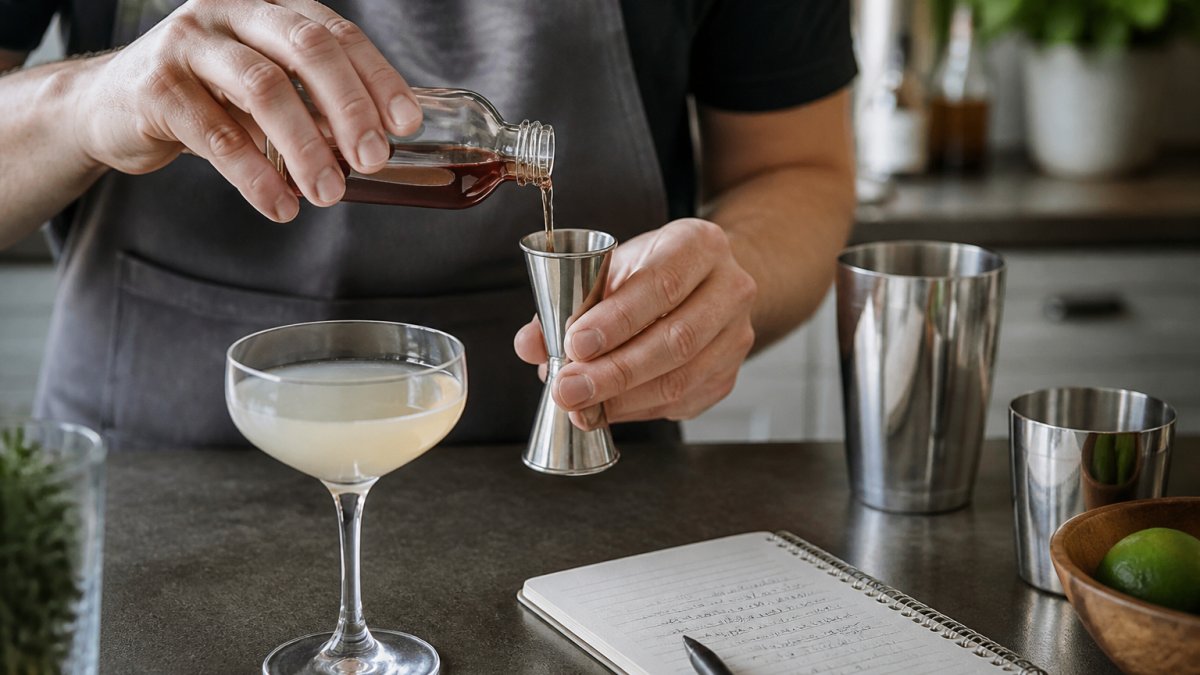
Step 1: Build to a Known Ratio
Start from a fixed template so you have a baseline to correct against. The Daiquiri ratio of 2:1:1 (spirit:citrus:syrup) is the standard home baseline because it keeps the spirit at double the weight of each modifier. Measure in parts with a jigger, not by eye.
Step 2: Taste Before Ice, Then After Dilution
Taste a small sip of the undiluted mixture first. You are checking the raw balance: is the citrus sharp enough to cut the syrup, and is the spirit still present? Then shake or stir and taste again. Dilution typically adds roughly a fifth to a quarter of the drink's volume in water, which softens heat and opens aroma.
Step 3: Change One Lever at a Time, in Small Increments
Make one correction, taste, and stop if the flaw is gone. Work in these increments:
- Acid: one bar spoon (about 5 ml) of lemon or lime juice
- Syrup: one bar spoon (about 5 ml) of 1:1 simple syrup
- Dilution: one teaspoon (about 5 ml) of water, or 5 extra seconds of stirring
A common pattern is that a drink needs one or two of these increments, not a rebuild. If you find yourself adding more than three increments of the same lever, the base ratio is wrong and you should start again.
Step 4: Record the Build and the Result
Write down the exact parts, the increments you added, and whether the drink improved. Two or three rounds and you will know your own palate and your own bottles. This notebook is the whole trick: it turns 'season to taste' into a repeatable recipe.
Step 5: Repeat the Exact Build Next Time
Once you have a build you like, scale it. A single drink at 2:1:1 scales to a batch by multiplying every part by the number of servings, then adding dilution separately: for a shaken batch, add about 20-25% of the total volume in water before chilling, or shake each drink individually if you want the same texture.
Ingredient Troubleshooting: Matching the Fix to the Flaw
Match the fix to the flaw, not to a hunch. Most home guides focus on sweetness, but the more useful skill is diagnosing which lever is actually out of line and correcting it with a measured increment. Refining these ratios requires a nuanced approach to ingredients that push beyond simple sugar, much like the techniques used to balance spice and sweetness in more complex culinary applications.
| Problem | Likely cause | First fix | Second fix |
|---|---|---|---|
| Too sweet / cloying | Too much syrup or sweet spirit | 5 ml citrus | 5 ml water or 5 extra seconds stirring |
| Too sour / sharp | Too much citrus or under-ripe fruit | 5 ml syrup | Pinch of salt |
| Too bitter | Too many dashes or over-extracted tonic | 5 ml syrup | 5 ml water |
| Too strong / hot | Under-diluted or high-proof spirit | More stir or shake time | 5 ml water |
| Too weak / watery | Over-diluted or melting ice | Fresh ice, stronger build | 5 ml spirit |
| Flat / dull | Missing salt or bitters | Pinch of salt | Two dashes of bitters |
| Diluted / thin | Warm ice or long build | Fresh ice, chill the glass | Reduce build time |
Too Sour
A drink that tastes sharp needs sweetness, not more citrus. Add 5 ml of 1:1 simple syrup and taste. If it is still sharp, a small pinch of salt will make the sweet and sour read more clearly without adding sugar. Under-ripe citrus is a common cause: a lemon or lime that is hard and pale yields less juice and more acid per drop, so taste your citrus before you build.
Too Bitter
Bitterness builds slowly on the palate, so taste between dashes. If a drink is too bitter, add 5 ml of syrup first, then 5 ml of water. Bitters are concentrated: two dashes is usually enough for a single drink, and a heavy hand with tonic or amaro can push a drink past balance quickly.
Too Strong or Too Hot
Alcohol heat is softened by dilution, not by adding more mixer. Stir or shake for longer, or add 5 ml of water and taste. A high-proof spirit (46% ABV and above) needs more dilution than a 40% ABV bottle to reach the same perceived softness, so adjust your shake or stir time to the bottle, not the recipe.
Too Weak or Watery
If a drink tastes watery, the cause is usually over-dilution or melting ice. Use fresh ice, chill the glass first, and build for less time. Only then consider adding 5 ml more spirit. A common mistake is adding more spirit to fix a weak drink when it is really dilution or acid that is missing.
Flat or Dull
A flat drink usually needs salt or bitters, not more spirit. A pinch of salt enhances the perception of sweet and sour, and two dashes of bitters add depth and finish. If the drink is still flat, check the citrus: juice that has been sitting for hours loses aroma and brightness.
Diluted or Thin
Wet, melting ice from a warm bucket dilutes far faster than fresh ice. Fill your glass properly, use ice straight from the freezer, and your ratios will hold. For long drinks, build over fresh ice and stir briefly rather than shaking.
Ingredient Variation and Substitutions
Knowing how to balance flavours shifts with the ingredient, not just the ratio. Citrus ripeness, syrup concentration, spirit proof and mixer choice all change the result:
- Citrus: a ripe lime yields more juice and less acid per drop than a hard, pale one. Taste before you build and adjust the citrus down if the fruit is very ripe.
- Syrup: 1:1 simple syrup is the home standard; 2:1 rich syrup is sweeter per ml, so use about half as much. Honey and agave are sweeter than sugar syrup and need less.
- Spirit proof: a 46% ABV rum needs more dilution than a 40% ABV bottle to reach the same softness. Adjust shake or stir time to the bottle.
If you swap a spirit, expect to re-balance. A rum sour built with a sweet, heavily sugared rum will need less syrup than one built with an additive-free bottle.
Building Your Home Balancing Kit with Solar Reserve Rum
A good kit is small: a jigger, a bar spoon, fresh citrus, a quality syrup, bitters, salt and one dependable spirit. That's enough to practise every lever.
Our Solar Reserve Discovery Duo gives you two expressions to work with. Solar Reserve 55 (£47.90) is a 43% ABV golden blend with natural caramel, toffee and vanilla notes, plus a grassy Jamaican character. Solar Reserve 8 (£59.90) is a 46% ABV single-origin rum with mango, toffee and baking spice.

Both are made without added sugar and aged in American bourbon oak casks, so your ratios stay honest. We'd rather you taste it and decide.
Frequently Asked Questions
What flavours make a cocktail taste balanced?
A balanced drink has sweetness, acidity, spirit strength and a little bitterness in proportion, with no single element shouting over the others. The classic sour template, roughly two parts spirit to one part citrus and one part syrup, gives you a starting point. From there, taste and adjust: if the citrus bites, add a barspoon of syrup; if it tastes flat, add a squeeze of lime or lemon. Salt and aromatic bitters can round off the edges without changing the core ratio.
How do you make a cocktail less sour?
Add sweetness in small increments rather than reaching for more spirit. A barspoon of syrup, about 5ml, is usually enough to soften an aggressive lime or lemon edge. If the drink still tastes sharp, check your citrus: a lime that is past its best gives a harsh, pithy sourness that no amount of sugar fixes. Freshly squeezed juice and a short rest over ice will also mellow the drink as dilution opens it up.
How does dilution affect the balance of a cocktail?
Ice melt lowers the alcohol strength and softens both the sweetness and the acidity at the same time, which is why a drink tastes rounder after a good shake. A Daiquiri shaken hard for 10 to 12 seconds picks up roughly 20 to 25% of its volume in water. Stirred drinks dilute more slowly. If you shake too briefly the drink stays hot and sharp; shake too long and it turns watery. Taste at the point you plan to serve it.
Can you balance a cocktail without adding more alcohol?
Yes. Dilution, citrus, syrup, bitters and a pinch of salt all shift the balance without raising the alcohol content. If a drink tastes thin, a dash of saline solution (about 20% salt to water) adds body and makes the fruit notes read more clearly. Aromatic bitters add complexity in tiny amounts. For lower-alcohol serves, lengthen with soda or ginger ale and reduce the syrup slightly, since mixers often carry their own sugar.
Balancing a drink is a skill you build, one measured adjustment at a time. If you want a base spirit that won't fight your syrup, start with a rum built without added sugar. Get started with SolarRum and build a Daiquiri you can repeat, glass after glass.
