
Last Updated: November 4, 2026
Quick Summary
Estate-grown rum is distilled from sugarcane grown on or beside the estate where it is fermented and distilled, so fresh cane juice often replaces imported molasses. That short cane-to-cask journey, plus cane variety, soil and still type, gives estate-grown rum greener, more vegetal and mineral-led flavours than molasses-based spirits.
- Estate-grown rum is often fermented from fresh cane juice rather than molasses, pushing flavour toward green, vegetal notes.
- Pot stills retain more congeners for complexity, while column stills strip them back for a lighter, cleaner spirit.
- An age statement on small batch reserve rum means the youngest spirit in the blend, not the average.
- Solar Reserve 55 blends 3, 5 and 8 year old Dominican column rums with a 3 year old Jamaican pot still rum.
- Start a flight with Solar Reserve 55, then move to the 8 Year Old for deeper cask character.
Table of Contents
- Why Estate-Grown Caribbean Rum Tastes Different
- How Terroir and Cane Source Shape Flavour
- Small Batch Reserve Rums: What the Label Actually Tells You
- Sustainable Rum Production Methods and What They Do to Taste
- No Added Sugar Rum Benefits for Sipping and Cocktails
- Three Estate-Grown Rums Compared Side by Side
- Matching Each Bottle to the Right Occasion
- Building Your First Estate-Grown Rum Flight
- Frequently Asked Questions
Why Estate-Grown Caribbean Rum Tastes Different
The global rum market was valued at USD 20.13 billion in 2025, according to Maximize Market Research's rum market report, and dark rum alone accounted for 41.02% of total rum volume that year per Mordor Intelligence's category analysis. That scale hides a simple truth: the estate-grown Caribbean rum flavor comparison most drinkers never make is the one that matters most. Rum made from cane grown on the distillery's own land tastes different from rum made from imported molasses, and the gap shows up in the glass long before the label tells you anything.
SolarRum exists because of that gap. Our rums come from distilleries that prioritise sustainability and use locally grown estate sugarcane rather than importing it, and every bottle is built without added sugar.
Estate-grown rum is a spirit distilled from sugarcane cultivated on or directly beside the estate where fermentation and distillation happen, keeping the cane-to-cask journey short and traceable.
That definition matters because it changes what reaches your glass.
Below, we break down how terroir, cask choice and production method shape flavour, and compare three bottles side by side so you can taste the difference yourself.
How Terroir and Cane Source Shape Flavour
Terroir in rum works the way it does in wine: soil, rainfall and cane variety leave a fingerprint on the spirit. The difference is that rum makers rarely talk about it, which is why the estate-grown distinction is the most useful comparison a drinker can make.
Start with the cane itself. Most commercial rum is fermented from molasses, a thick dark syrup left after sugar crystallisation. Estate-grown rum is often fermented from fresh cane juice. The two start from the same plant but behave differently in the fermenter. Juice carries more water, more natural yeasts and more of the green, vegetal compounds that give cane its character. Molasses is denser and darker, and pushes the spirit toward caramel, treacle and dried fruit.
Cane variety matters as much as the source. Varieties bred for high sucrose yield tend to give cleaner, sweeter juice; older or lower-yield varieties often carry more of the grassy, earthy notes that estate distillers prize.
Soil and rainfall then shape what the cane takes up. Volcanic soils tend to produce cane with more mineral character; heavy clay holds water and can push vegetal notes; limestone-rich ground often correlates with brighter, cleaner juice. None of this is a guarantee, but it explains why two estates a few miles apart can produce rums that taste clearly different.
Distillation decides how much of that character survives. Pot stills run in batches and retain more congeners, the compounds behind aroma and complexity. Column stills strip those back for a lighter, cleaner spirit. Neither is better. They answer different questions, and many estate distillers run both so they can blend weight with brightness.
Fermentation length and yeast choice add another layer. A slow ferment teases out tropical fruit and spice. A fast one keeps things crisp.
For a plain-English walkthrough of Jamaican funk, pot stills, cane juice versus molasses and tropical ageing, read The Solar Rum Guide.
Small Batch Reserve Rums: What the Label Actually Tells You
Small batch reserve rums are spirits produced in limited runs and aged longer than standard bottlings, but the terms carry no legal definition, so the label rewards careful reading. Age statements, cask type and origin tell you far more than "reserve" ever will.
Three things to check before you buy:
- Age statement: a number means the youngest spirit in the blend, not the average.
- Cask type: ex-bourbon American oak adds vanilla and coconut; ex-sherry adds dried fruit.
- Origin: single estate or single origin signals traceable cane, not bought-in spirit.
CARICOM's rum standard also limits permitted colour to what comes from wood ageing or sugar-based caramel, which is why additive-free bottlings look lighter than expected.
Sustainable Rum Production Methods and What They Do to Taste
Sustainable rum production methods cover sourcing cane locally and prioritising sustainability at the distillery.
SolarRum sources from distilleries that prioritise sustainability and use locally grown estate sugarcane rather than importing it. We do not claim certifications we do not hold; we point to the sourcing model itself.
If you want the deeper explainer, our guide to sustainable rum production covers the methods in detail.
No Added Sugar Rum Benefits for Sipping and Cocktails
No added sugar rum benefits start with honesty on the palate. Without dosing, you taste the spirit, the cask and the cane rather than a syrup designed to smooth over rough edges. The mouthfeel stays drier, the finish cleaner, and the flavour reads as the distillery intended.
That matters in cocktails too. A Daiquiri built on an undosed rum tastes brighter and more precise. A Rum Old Fashioned keeps its structure instead of turning syrupy.
Watch out: some heavily dosed rums mask a young, harsh base, so check the label rather than trusting "smooth" as a descriptor. Our practical guide to identifying sugar in rum shows you how to spot it before you sip or mix.
Three Estate-Grown Rums Compared Side by Side
Here is where the estate-grown Caribbean rum flavor comparison becomes concrete. Three bottles, three different jobs, one shared rule: no added sugar. The point of tasting them together is not to rank them but to see how the same estate-grown approach produces different flavours depending on cane source, still type and cask.
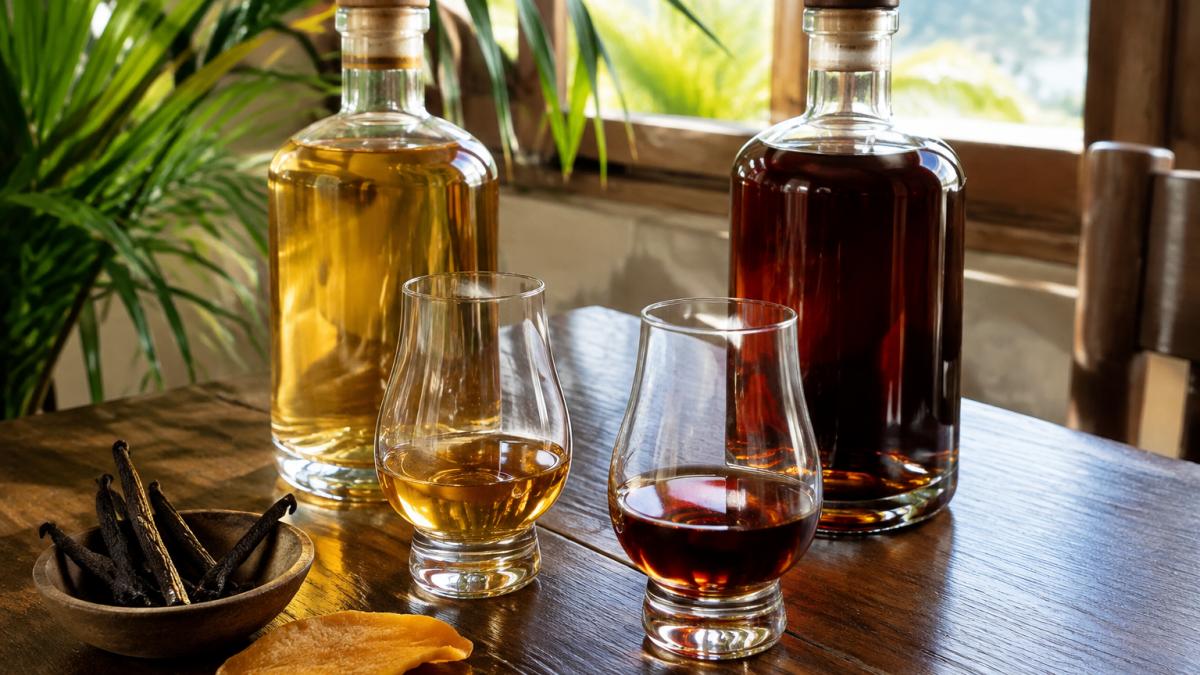
Solar Reserve 55 (£47.90) blends 3, 5 and 8 year old Dominican Republic column still rums with a 3 year old Jamaican pot still rum. Expect natural caramel, toffee and warm vanilla, tropical fruit, a hint of Jamaican grassy funk and light spice. It has won Gold at The Spirits Business Rum & Cachaça Masters 2026 and a 95-point Gold Medal at the 2025 London Spirits Competition. Best for: cocktails and easy neat sipping.
Solar Reserve 8 Year Old (£59.90) is a single origin Dominican Republic rum made from fresh cane juice, aged 8 years in once-used ex-bourbon American oak at 46% ABV. Sweet mango, toffee, coconut, hazelnut and baking spice lead into fudge and warm Christmas spices. Best for: slow neat sipping.
Solar Reserve Discovery Duo (£98.10) pairs both bottles with 12% off and free delivery. Best for: anyone building a first flight.
| Bottle | Price | ABV | Style | Cane source | Still type | Dominant flavours | Best For |
|---|---|---|---|---|---|---|---|
| Solar Reserve 55 | £47.90 | 43% | Blended golden | Molasses and fresh juice blend | Column and pot | Caramel, toffee, tropical fruit, light funk | Cocktails, versatile sipping |
| Solar Reserve 8 Year Old | £59.90 | 46% | Single origin dark | Fresh cane juice | Column | Mango, coconut, hazelnut, baking spice | Neat sipping |
| Discovery Duo | £98.10 | 43% / 46% | Both bottles | Both | Both | Full contrast flight | First tasting flight |
Before you open either bottle, our guide on how to compare small batch reserve rums gives you a practical tasting method.
Matching Each Bottle to the Right Occasion
Occasion decides the pour more than price does. Solar Reserve 55 suits a dinner party Daiquiri or a rum and ginger beer. Solar Reserve 8 rewards a quiet evening and a single ice cube, where its vanilla and oak can stretch out. The Discovery Duo covers both, which makes it the natural gift or starting point.
Pairing follows the same logic.
Best for: hosts who want one bottle that does everything, choose the 55. Skip if: you only drink neat and want maximum depth, go straight to the 8.
Building Your First Estate-Grown Rum Flight
A flight needs contrast, not volume. Start with Solar Reserve 55, note its fruit and spice, then move to the 8 Year Old for the deeper cask character.
The Solar Reserve Discovery Duo gives you both bottles in one order, with the discount already applied.

Tasting estate-grown rum next to a mass-market bottle is the fastest way to understand what traceable cane and honest ageing actually deliver. SolarRum bottles rums from distilleries that grow their own sugarcane, built without added sugar and aged in American bourbon oak casks, then finished by Scottish cask masters. Start with the Discovery Duo and taste both expressions side by side, or try the award-winning Solar Reserve 55 on its own. Get started with SolarRum and taste the difference in your glass.
Frequently Asked Questions
What does estate-grown mean in rum production?
Estate-grown means the sugarcane is grown on or near the estate where the rum is distilled, rather than sourced on the open market.
How does terroir affect the flavour profile of Caribbean rum?
Soil, rainfall and cane variety change the sugars and congeners that reach fermentation, and those carry through to the finished spirit.
Is no added sugar rum actually better for cocktails?
It depends on the drink. For a Rum Old Fashioned, an additive-free bottle lets you control the syrup yourself, which is the point of building the drink at home.
What is the difference between pot still and column still rum?
Pot stills distil in batches and retain more congeners, which gives heavier, funkier, more aromatic spirit. Column stills run continuously and produce a lighter, cleaner distillate. The ratio between them is often what separates a versatile sipping rum from a cocktail base.
