
Last Updated: November 8, 2026
Quick Summary
Rum from sugar cane is made by pressing the cane for juice or using molasses, fermenting the sugary wash with yeast, distilling it in pot or column stills, ageing it in oak casks, then blending and bottling it. Each stage, from yeast choice to cask type, shapes the final flavour.
- Rum can be made from fresh cane juice, which tastes grassier, or from molasses, which tastes richer and more caramelised.
- Fermentation length and yeast choice strongly influence fruity and floral flavours in the finished rum.
- Pot stills retain more flavour and give fuller rum, while column stills produce lighter, cleaner spirit.
- Oak casks add caramel, vanilla and spice, and warm, humid climates speed up maturation.
- Start with an aged blend, which combines pot still character with column still smoothness.
Table of Contents
- What Rum From Sugar Cane Starts With: Juice or Molasses
- Step 1: Harvesting and Pressing the Cane
- Step 2: Clarifying and Preparing the Wash
- Step 3: Fermentation and Distillation
- Step 4: Ageing the Rum in Casks
- Step 5: Blending, Bottling and Checking Your Finished Rum
- Choosing Your First Bottle of Sugar Cane Rum
- Frequently Asked Questions
Rum starts life as one of the simplest crops in the Caribbean: sugar cane. Turning that cane into a finished spirit takes a sequence of steps, and each one shapes how the rum tastes, from the first cut of the field to the last sip of rum from sugar cane in the glass. This guide walks through how rum is made from sugar cane, step by step, from the field to the bottle.
What Rum From Sugar Cane Starts With: Juice or Molasses
Rum can be made from two main starting points, and the choice changes the final character of the spirit. Some producers ferment fresh cane juice directly. Others use molasses, the thick, dark syrup left after sugar crystals are removed from cane juice.
Fresh cane juice versus molasses
Fresh cane juice gives a grassier, lighter-bodied rum. Molasses gives a richer, more caramelised spirit. Cane juice rums are less common but tend to taste brighter and more vegetal, which many sipping drinkers prefer.
Step 1: Harvesting and Pressing the Cane
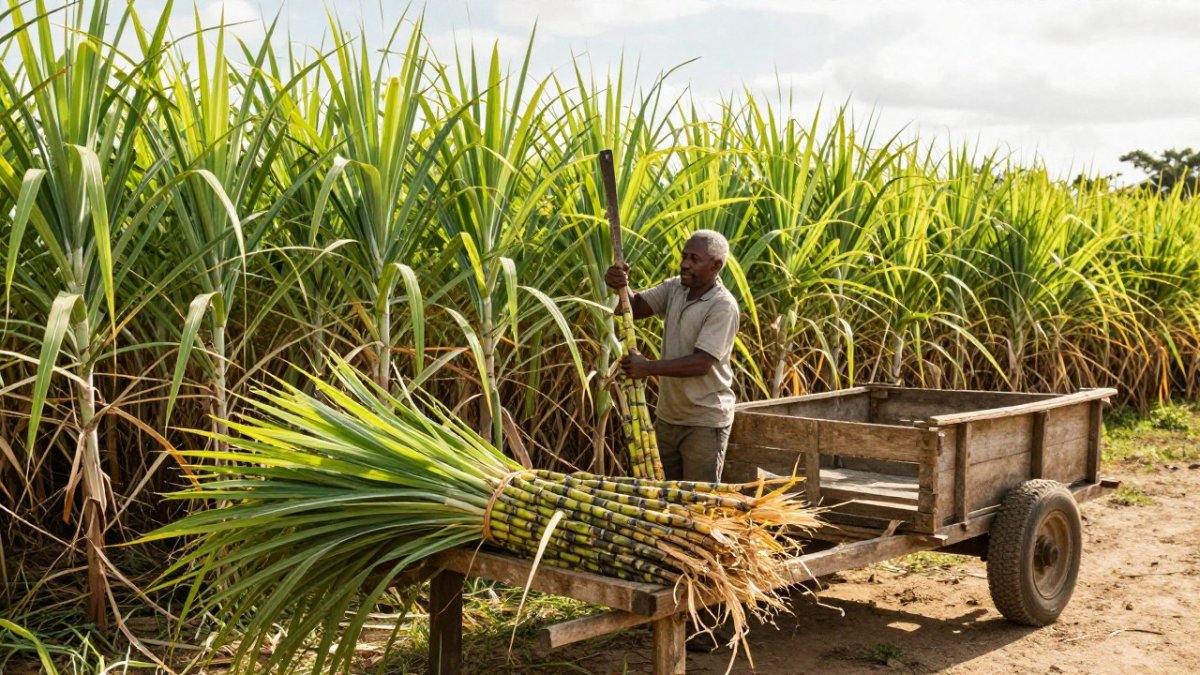
Cane is harvested when its sugar content is at its peak. Sugar cane is a tall grass, and the stalks are cut close to the ground. Once cut, the cane must be processed quickly, because the sugar starts to break down soon after harvest.
The stalks are then crushed between heavy rollers to squeeze out the juice. What remains is a fibrous material called bagasse. Many producers burn bagasse to fuel their boilers, which helps reduce waste.
Pressing is also where the local character of the rum begins. To see how sourcing shows up in the glass, compare estate-grown Caribbean rums ranked by flavour.
Step 2: Clarifying and Preparing the Wash
The raw juice or molasses is then turned into a "wash," the fermentable liquid that yeast will work on. This happens in a few stages:
- Dilution: Water is added to bring the sugar content to the right level for yeast.
- Clarification: Impurities are filtered or settled out, so they do not taint the flavour.
- Adjustment: Nutrients may be added to help the yeast grow well.
Getting this step right matters. A clean wash leads to a cleaner spirit, with fewer off-flavours.
Step 3: Fermentation and Distillation
Fermentation is where rum's flavour is largely decided, and distillation is where it is concentrated and refined.
Fermentation: turning sugar into a low-strength wash
Yeast is pitched into the prepared wash and begins converting sugars into alcohol and carbon dioxide. In practice, distillers vary three things that change the result:
- Yeast selection. Many producers use a cultivated distiller's yeast for reliability, while others rely on wild or native yeasts, sometimes encouraged by leaving the wash open to the air or by reusing fermentation vessels. Wild fermentations tend to be slower and less predictable, but they generate a wider spread of aroma compounds.
- Fermentation length. A fast fermentation of around two to three days is common for molasses washes, while slower, cooler fermentations can run for a week or more. Slower fermentations generally retain more delicate fruity and floral notes; fast, warm fermentations push toward heavier, more ester-driven character.
- Wash strength. Pushing the sugar concentration higher can stall the yeast and leave residual sugar, so distillers dilute to a level the yeast can finish cleanly.
A common pattern is that the biggest flavour differences between two otherwise similar rums come from the yeast and the fermentation regime, not from the still alone.
The chemistry behind the flavour
During fermentation, yeast produces not just ethanol but a family of secondary compounds, esters, higher alcohols (congeners) and aldehydes, that give rum its fruity, floral and spicy notes. Esters such as ethyl acetate and isoamyl acetate are responsible for the banana, pear-drop and tropical-fruit aromas often associated with Jamaican-style rum. Longer, warmer fermentations with wild yeast tend to produce more of these compounds, which is one reason some rums taste far fruitier than others made from the same cane.
Distillation: concentrating and selecting
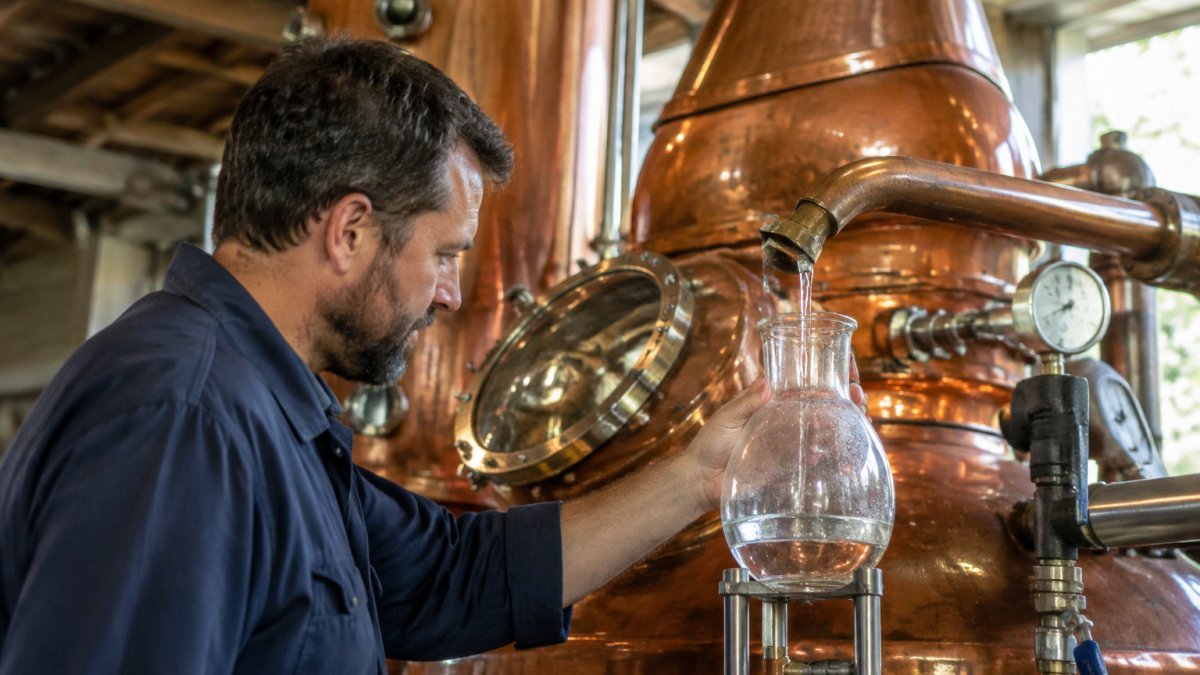
The wash is heated, and the alcohol-rich vapour is collected and condensed. Distillers make cuts during the run, separating the early "heads," the usable "hearts," and the late "tails." Only the hearts go into the finished rum; the heads contain harsh, solvent-like compounds and the tails carry heavy, oily notes. The skill lies in where the cuts are made, a wider hearts cut keeps more character but risks roughness, while a narrow cut gives a cleaner but less distinctive spirit.
Pot still versus column still
Two main types of still are used, and they produce different results:
- Pot stills work in batches. They retain more flavour compounds, so the rum tends to be fuller and more characterful.
- Column stills run continuously and can produce a much lighter, more neutral spirit at higher strength, often 90% alcohol by volume or more. The repeated distillation strips out many congeners, giving a cleaner, lighter rum.
Many rums blend both. A pot still spirit adds depth, while a column still spirit adds smoothness. The ratio of pot to column spirit in a blend is one of the master blender's main levers for style.
Watch out: A higher distillation strength is not automatically "better", it removes the very compounds that give a rum its character, so a light column-still rum and a heavy pot-still rum are different tools rather than points on a quality scale.
The table below sums up how the main choices made during fermentation and distillation shape the finished rum.
| Stage | Choice | Effect on the rum |
|---|---|---|
| Yeast | Cultivated distiller's yeast | Reliable, predictable results |
| Yeast | Wild or native yeast | Slower, less predictable, wider aroma spread |
| Fermentation length | Two to three days (molasses) | Heavier, ester-driven character |
| Fermentation length | A week or more, cooler | Retains delicate fruity and floral notes |
| Still | Pot still | Fuller, more characterful rum |
| Still | Column still | Lighter, cleaner, more neutral spirit |
| Cut | Narrow hearts cut | Cleaner but less distinctive spirit |
| Cut | Wider hearts cut | Keeps more character, risks roughness |
Step 4: Ageing the Rum in Casks
Fresh rum is clear and sharp. Ageing in oak casks changes its colour and flavour, and it is where much of the difference between a young mixing rum and a sipping rum is made.
What the cask does
Over time the spirit picks up caramel, vanilla, toffee and spice from the wood, and some harsher notes soften. Three factors drive how fast and how far this happens:
- Cask type and previous contents. Ex-sherry, ex-cognac and ex-wine casks are also used, each layering in its own character, dried fruit from sherry, for example.
- Cask size. Smaller casks expose more liquid to wood per unit of volume, so maturation runs faster.
- Climate. In warm, humid climates, rum matures faster than whisky, so a few years in the tropics can develop as much character as a longer spell in a cooler country. Warm, humid conditions also drive more evaporation, the "angel's share", which concentrates the remaining spirit.
Age statements and what they mean
Age statements on rum are not harmonised across the category. Some producers put the youngest rum in the blend on the label, others put the oldest, and some use a solera-style system where rums of different ages are blended continuously. A number on the bottle is therefore a guide to style rather than a guarantee of average age.
Regional production styles
How a rum is made and aged varies sharply by tradition, and this is the part most guides skip:
- British/Caribbean style. Often molasses-based, frequently pot-distilled or a pot-column blend, and aged in ex-bourbon casks. These rums tend to be heavier and more ester-driven, Jamaican rum is the classic example.
- Spanish/Cuban style. Typically column-distilled for a lighter body and aged in a solera system, giving a smoother, softer profile.
- French/Creole style (rhum agricole). Made from fresh cane juice rather than molasses, usually column-distilled and aged in French oak, producing a grassier, more vegetal spirit.
Watch out: Ageing time is not the only thing that shapes flavour. The cask's previous contents, its size and the local climate matter just as much, so a longer age statement does not always mean a better rum, and a young rum aged in a small, active cask can taste older than its years.
Step 5: Blending, Bottling and Checking Your Finished Rum
Once the rum has matured, the master blender tastes different casks and decides how to combine them. Blending balances sweetness, spice, body and smoothness. Some rums are also finished with a small amount of an older rum to add complexity.
When you open a bottle at home, you can judge the rum yourself. Pour a small measure and smell it first, then taste it neat. Look for the balance of vanilla, oak and fruit, and check whether the finish is clean. To judge sweetness specifically, read our practical guide to spotting added sugar.
Choosing Your First Bottle of Sugar Cane Rum
If you are buying your first sugar cane rum, start with a blend. Blended rums combine pot still character with column still smoothness, which makes them easy to sip and easy to mix.
- For sipping neat: Choose an aged blend with a clear age statement.
- For cocktails: Pick a versatile golden rum that holds its flavour in a Daiquiri or an Old Fashioned.
- For a tasting set: Try a small range so you can compare styles side by side.
Our Solar Reserve 55 is a good starting point. It blends Jamaican pot still character with Dominican Republic smoothness, and it suits sipping as well as mixing. If you want to see how cask ageing shapes a rum, our Solar Reserve 8 is aged 8 years in ex-bourbon barrels, and the Solar Reserve Discovery Duo lets you taste both side by side.

Frequently Asked Questions
How is rum made from sugar cane?
Rum is made by fermenting sugar cane juice or molasses with yeast, distilling the resulting wash into a spirit, and ageing it in casks. The cane is pressed, the juice is clarified, and fermentation turns its sugars into alcohol over one to several days. The spirit is then distilled in a pot still or column still before ageing and blending.
Is rum made from sugar cane juice or molasses?
Both are used. Agricole rum is made from fresh sugar cane juice, which keeps more grassy and vegetal character. Most other rums are made from molasses, the thick by-product of sugar refining, which gives richer caramel and treacle notes. The choice of base shapes the flavour of the finished spirit, so check the bottle to see which one was used.
How long is rum aged in barrels?
Rum ageing time varies widely. Some rums are bottled after a few years, while premium expressions are aged for eight years or longer. Warm climates speed up maturation because the spirit moves in and out of the cask wood more quickly. Many producers use ex-bourbon American oak casks, which add vanilla and caramel notes. Ageing stops once the rum is bottled.
Does rum have sugar added after distillation?
Some rums have sugar or flavourings added after distillation, but many premium rums do not. Unsweetened rums rely only on the character from fermentation, distillation and ageing. Check the label or product listing if you want a rum with no added sugar, particularly for cocktails where sweetness needs to be controlled.
